
Race and discrimination continue to come up in Australian news and conversation, from the treatment of Indigenous Australians to anti-Semitism, anti-Muslim sentiment, and discrimination against African and Indian Australians. It’s not always an easy topic, but it’s one worth having with your kids early and often.
We’re not educators or child psychologists here, just parents who care about raising kids who understand and respect difference. What follows are practical starting points that have worked for local families, not a definitive guide. If you’ve found something that works for yours, we’d love to hear it.
“The real reward is when everyone is talking to their mates, to their families and to their children, having those conversations and educating others about racism. What it looks like, how hurtful and how pointless it is, and how we can eliminate it.”
Adam Goodes, January 26 2014 – Australian of the Year
Jump to a section: Speak to your kids about race | Talk about racism | Encourage diversity | Eat around the world | Diverse dolls | World music | Read diverse books | Watch diverse TV & movies | More resources | FAQS
Speak to your kids about race
Wondering how to explain race and diversity to your children? You’ll find kids are curious creatures and they might ask why their friends look different to them. Use this question as a starting point to speak about race and diversity.
Kids are curious, and they’ll often ask why their friends look different to them. That question is a good opening, not something to brush past.
One simple approach many parents use is comparing skin tones to flavours or crayon shades kids already know, like chocolate, vanilla and caramel. As kids get older, you can build on this by explaining that skin colour comes down to how much melanin is in someone’s skin, and that it has nothing to do with a person’s worth, intelligence or beauty.
Crayola’s Colours of the World range includes 24 different skin tone crayons, so kids of all shades can draw pictures that actually look like them. It’s available in Australia at different retailers.
Talk about racism
These are harder conversations, but worth having. Explain that people can be treated differently because of their skin colour, and that this is called racism. Your kids may already be aware of it, or experiencing it themselves, without you knowing.
Unfortunately, it still shows up in ordinary places. We’ve heard from local parents about young kids facing hurtful comments in the primary school playground or in high school, and others whose children have faced anti-Muslim or anti-Asian comments from classmates. It also turns up outside school, including on the sports field.
Encourage your kids to speak up if they experience or witness racism, and let them know it’s never acceptable. Follow up with the school if it happens there. Australian schools have access to anti-racism and discrimination resources designed to help prevent it going forward.
It’s also worth teaching kids how to be good allies, meaning they know how to listen to a friend who’s experiencing racism, validate what they’re feeling, and hold space for them without judgement.
Facebook comment from Jamie: This is a great starting point. I think it is also important to teach our children to be good allies; to be able to just listen to their friends who are experiencing racism, validate their feelings and to do so without judgement or opinion. The ability to hold space for others is so invaluable.
If you have older kids, Taika Waititi’s contribution to the Give Nothing to Racism campaign is a sharp, funny demonstration of how easily casual racism slips into everyday conversation, and a good one to watch together before discussing.
Encourage diversity
Multicultural festivals and events are an easy, low-pressure way to expose kids to cultures outside their own. The Hunter region runs several worth checking out each year, including multicultural festivals in Maitland, Lunar New Year celebrations, and diversity-focused community events across Lake Macquarie and Newcastle.
It’s also worth being open to your kids forming friendships with kids from different backgrounds. Not chasing diversity as a checklist, just not closing it off either.
Here’s more ideas on how to celebrate multiculturalism: Multicultural Events & Activities for Families in Newcastle, Lake Macquarie & Hunter
Eat around the world
Food is one of the easiest doors into another culture. Australia makes this simple, with sushi, laksa, butter chicken, fajitas, empanadas and spanakopita all readily available. Cooking or ordering from a different cuisine each week is a low-effort way to normalise difference at the dinner table.
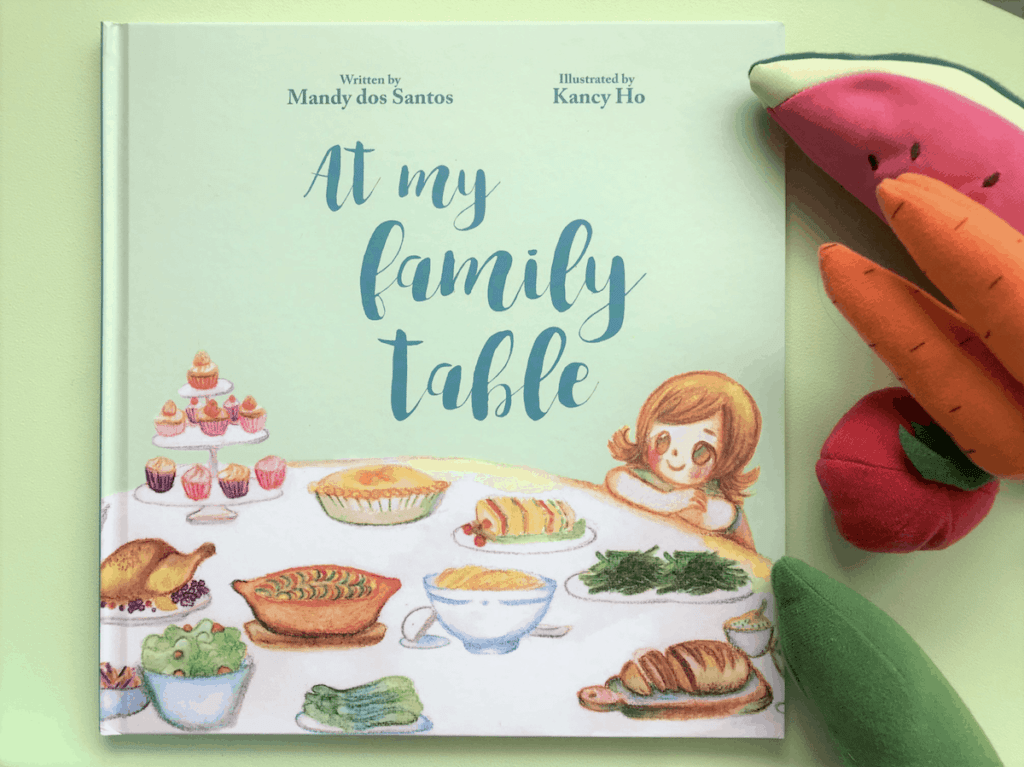
Mandy dos Santos from Little People Nutrition based on the Central Coast has written a beautiful picture book called “At My Family Table.” In this book, she shares four families from around the world who are sitting down to eat a family meal. She explains that “Although the family meal choices or dynamic might be different to our own, we all share the common adoration of enjoying a meal with our loved ones.” She recommends that families use the book as an opportunity to discuss culture, language and international cuisine.
Play with diverse dolls
Dolls that actually reflect the range of kids in their world help normalise skin colour early. Miniland Dolls come in a range of genders and ethnicities including Asian, African, Caucasian and Latin American, and retailers now stock dolls in different skin tones. Barbie’s Sisters and Chelsea Dolls collection has expanded in the same direction.
Listen to world music
Music is an easy, early way to introduce culture and language, even to very young kids. Putumayo Kids specialises in world music compilations for children, with titles like Kids World Party, Kids African Party and Australian Playground, the last of which features Aboriginal artists and singer-songwriters. Stream it, buy it directly, or borrow CDs through your local library.
Read diverse books
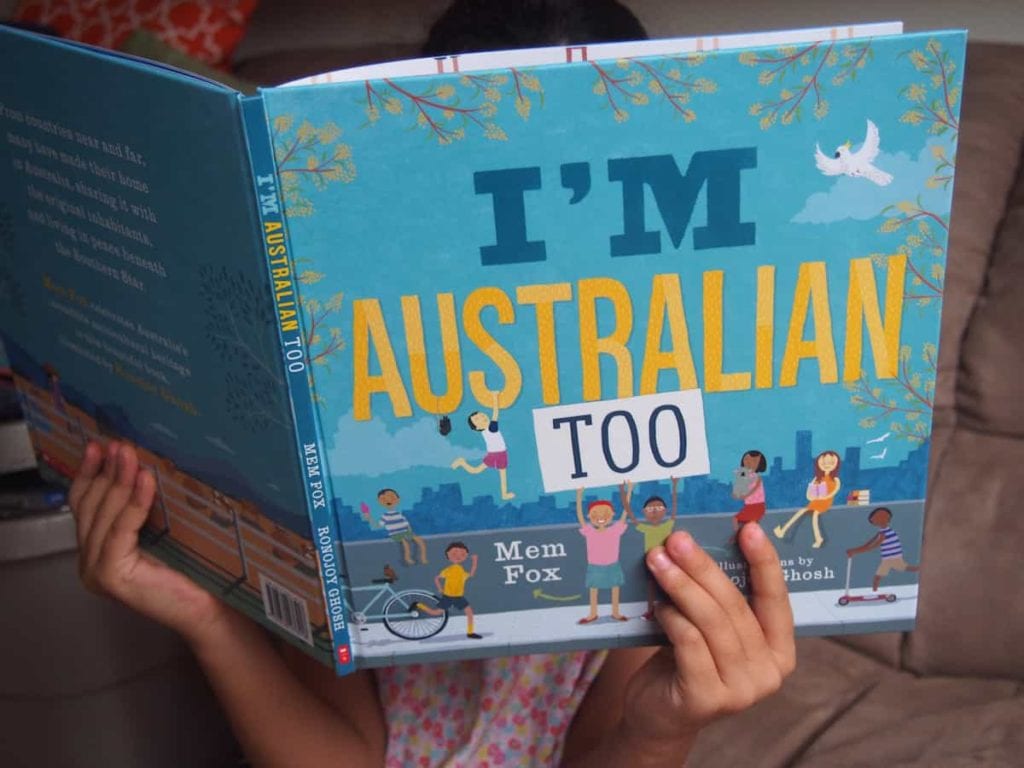
Books are one of the most effective ways to introduce race, diversity and inclusion, especially for younger kids who aren’t ready for a heavier conversation yet. We’ve put together a full list here: 50 Best Books to Educate Kids & Teens About Race, Racism and Diversity, sorted by age group from board books through to YA novels.
Watch Diverse TV & Movies
Here are TV shows and movies that feature diverse casts as well as promote cultural understanding and tolerance. There are also movies that deal specifically with racism which are worth watching with older kids and teenagers. All of these TV shows and movies provide a starting point to talk about race, diversity and ultimately tolerance.
- Play School – long-running ABC kids’ show with a genuinely diverse cast of presenters.
- Sesame Street – decades of modelling diversity through its core cast.
- Little J & Big Cuz – animated series following two young Aboriginal kids navigating school, culture and family with their Nanna.
- Mustangs FC – Australian comedy-drama following an all-female football team with a cast reflecting modern Australia.
- Barrumbi Kids – live-action drama following an Aboriginal boy and his non-Indigenous foster brother at a remote outback school.
- Where Are You Really From? – Comedian Michael Hing visits migrant communities across regional Australia to unpack the question in the title.
- What’s For Dinner – Australian families from different backgrounds share how they do dinner. Rated G.
- My Neighbor Totoro – Studio Ghibli classic, a gentle way into Japanese culture and animation. Rated G.
- Moana – Polynesian mythology, music and a strong self-belief story. Rated PG.
- Coco – A loving look at Hispanic culture and family through Día de los Muertos. Rated PG.
- Rabbit Proof Fence – Based on a true story of three girls escaping after being taken as part of the Stolen Generations. Rated PG.
- Hidden Figures – Three African-American women whose work helped launch NASA’s space program. Rated PG.
- The Sapphires – An Aboriginal music group performing for soldiers during the Vietnam War, based on a true story. Rated PG-13.
- The Hate U Give – A confronting look at police violence and activism through a teenage narrator. Best for older teens. Rated PG-13.
- The Australian Dream – Documentary exploring race, identity and belonging through Adam Goodes’ story.
- First Contact – Six non-Indigenous Australians experience Aboriginal Australia for the first time. Rated M.
- Sunshine – Crime drama following South Sudanese Australians building a new life in Melbourne. Rated M.
- East West 101 – Sydney-set crime drama exploring cultural tension within a police squad. Rated M.
More resources
To learn about promoting diversity and tolerance, Indigenous issues and standing up against racism, here are some websites to visit:
- Racism: It Stops With Me
- Racism No Way: Anti-racism education for Australian schools
- 10 Positive Ways to Engage With the Indigenous Issues including finding out about the mob in your local area with the AIATSIS map of Indigenous Australia. You can also discover local Aboriginal Culture at Murrook Culture Centre in Williamtown.
- Share Our Pride – a website that gives you a glimpse of how life looks from an Aboriginal and Torres Strait Islander perspective.