
Take a trip out to Coonabarabran, New South Wales. There is heaps to do on a family trip out to this area including the Siding Spring Observatory, walking in Warrumbungles National Park and stargazing in Dark Sky Country.
If you can time it right, the Coonabarabran October long weekend (2 and 3 October 2026) is one of the best times to visit. Siding Spring Observatory holds its once-a-year Open Day on 3 October, when the telescopes are opened up to the public for tours, talks and family activities. It’s the perfect excuse to book a few nights in town and combine the Open Day with the bushwalks and stargazing the region is known for.
Siding Spring Observatory
Located a 30-minute drive from Coonabarabran, Siding Spring Observatory is Australia’s largest telescope and is worth visiting, even just for the views from the site.
Siding Spring Observatory sits atop Mt Woorut, about 27km west of town. Follow the brown tourist signs along Timor Road from Coonabarabran, or if you’re coming from the west through Warrumbungle National Park, the turnoff is about 200m past the park’s eastern boundary.
The observatory is open to the public seven days a week, from 8:30 am to 4pm. The Café and Exploratory is open 6 days a week and closed on Tuesdays. The AAT Visitor Gallery will be open 7 days a week. Guided tours of the AAT and SSO are available. Contact Coonabarabran Stargazing at 0488 687 562 for further information as opening days and time may vary.

It’s then a walk up to the Observatory.
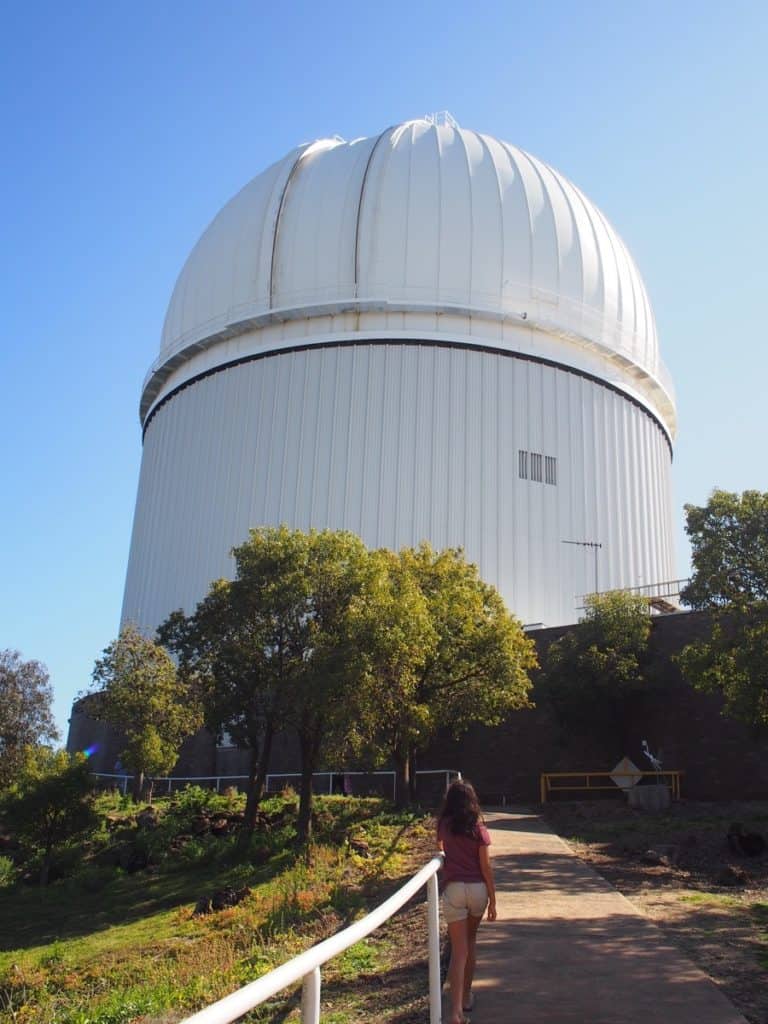
You can enter the Visitors Gallery, take the elevator and see this massive telescope.

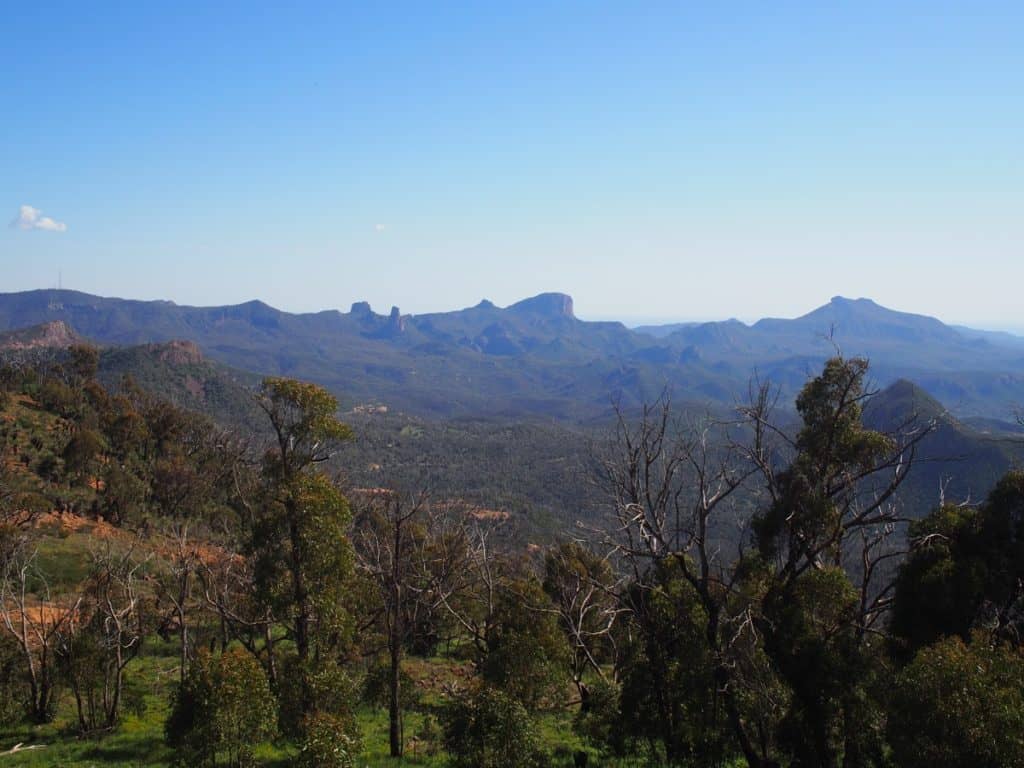
When you come out from the Observatory, take a few minutes to enjoy the views from high up on the hill. They’re pretty spectacular.
Siding Spring Observatory Open Day 2026
For one day of the year, Siding Spring Observatory opens its telescopes to the public. This year it falls on 3 October 2026, from 9:39am to 4:00pm, as part of the Coonabarabran October long weekend (2–3 October 2026). It’s a free event and no bookings are needed, so it’s a great excuse to book your accommodation in town and make a weekend of it.
It’s your chance to take a closer look at the operations of Australia’s largest optical telescope site. Tour the telescopes with ANU staff and hear talks by world-famous astronomers. Watch 3D films in the Exploratory Centre and see science displays on the AAT main floor. Enjoy activities for the whole family including local market stalls, solar viewing and much, much more. There are buses running around the site if you don’t fancy walking between telescopes.
Stargazing in Dark Sky Country
Warrumbungles National Park is designated as a Dark Sky Country and actively reduces its light pollution at night. The park is renowned for its stargazing opportunities thanks to its crystal-clear night skies, low humidity and high altitude. If you’re in the park after dark, look up and enjoy the stars on a clear night. It’s amazing how many you can see. For more information on spotting stars, check out our Stargazing and Dark Sky Trips for Families in NSW.
Solar System Drive
One thing you’ll notice at the Sliding Springs Observation is the Solar System Drive sign. This is the World’s Largest Virtual Solar System Drive on a much smaller scale (38 million times smaller to be exact).

Siding Spring Observatory is designated as the sun and consists of five tourist drives from different destinations including Dubbo Gulgong, Merriwa, Tamworth and Moree. It’s fascinating to drive by the different planets and see their relative distance to each other. The three-dimensional planets on the billboards are scaled in size relative to the huge observatory dome. Wait until you see the size of the larger planets!
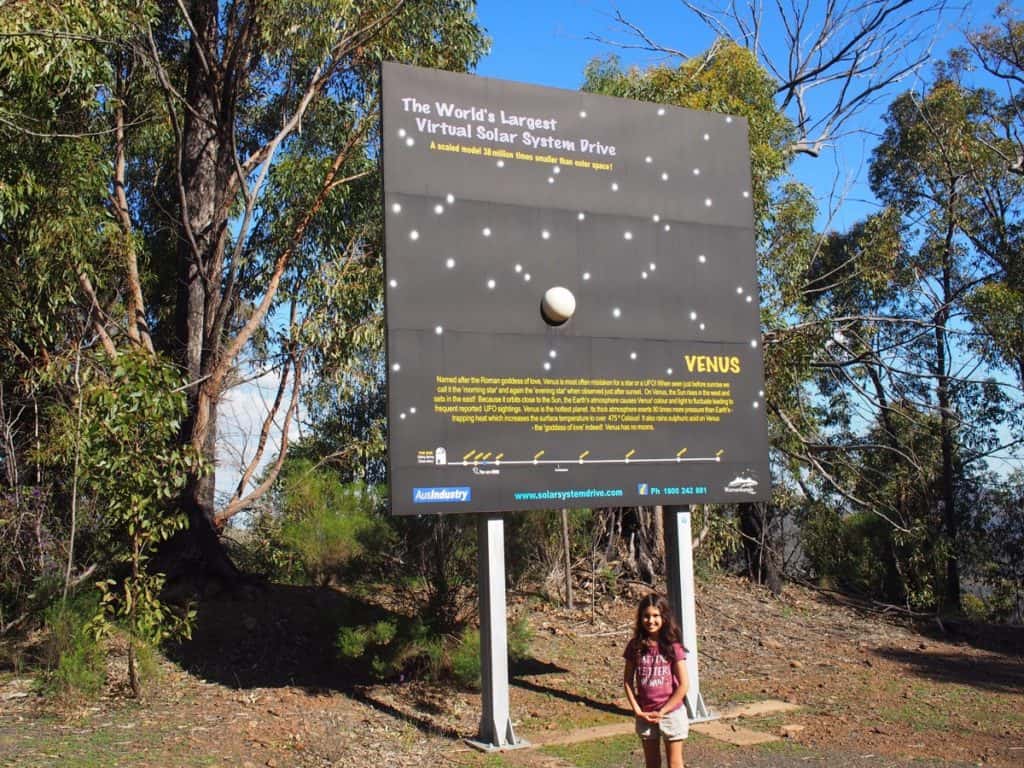
You’ll find Mercury, Venus, Earth, Mars and Jupiter on the way back to Coonabarabran but Neptune and dwarf planet Pluto are much further. It’s fun to see and pose with planets.
Warrumbungles National Park
Warrumbungles National Park is pretty spectacular. The site of a former large-shield volcano, the spires and domes remain and are easily spotted as you travel through the park. It’s a beautiful place that has picnic spots, kid-friendly walks and plenty of fresh air and nature to enjoy.
Warrumbungles Visitor Information Centre
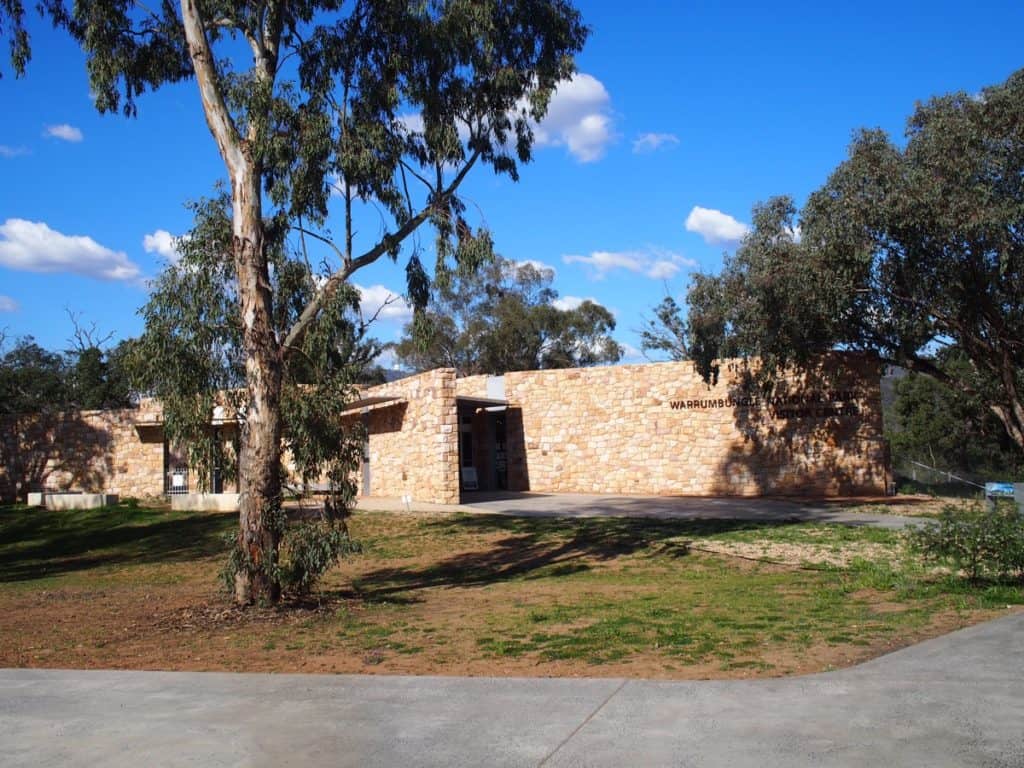
If you want some information about walks, picnic spots or park conditions, start with a visit to the Warrumbungles Visitor Information Centre. It’s a great introduction to Warrumbungles National Park with interesting exhibits about the park. In addition, you can purchase park passes, drinks, souvenirs and limited grocery items
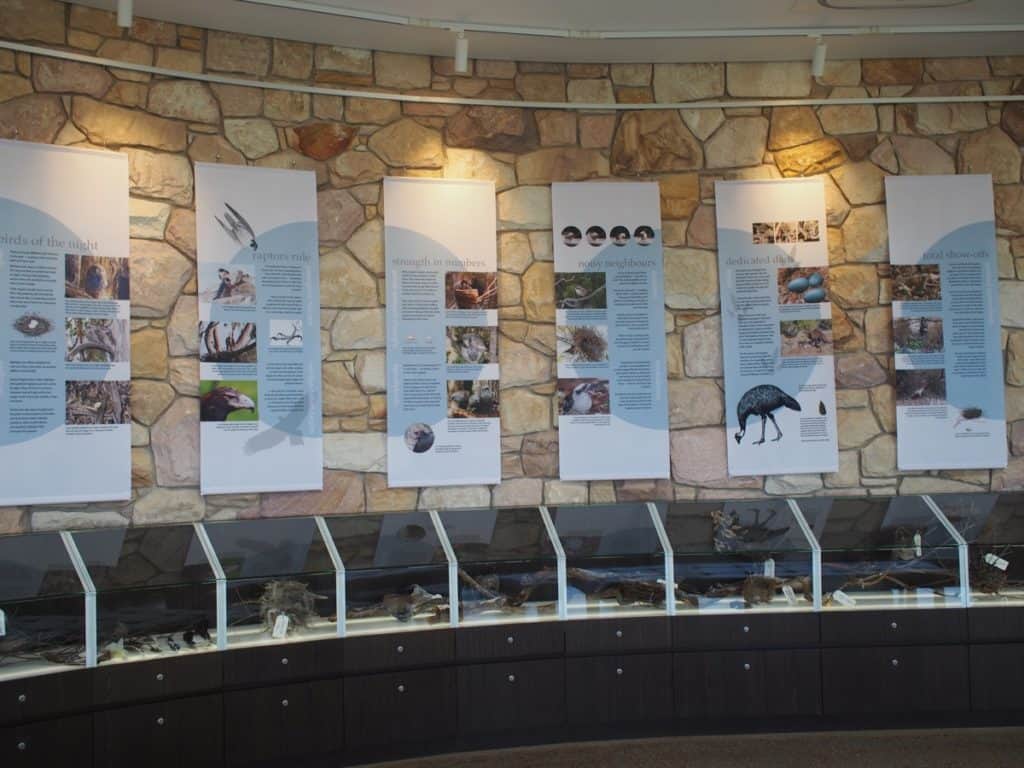
Check out their various exhibits which have lots of interesting information to read and play with.
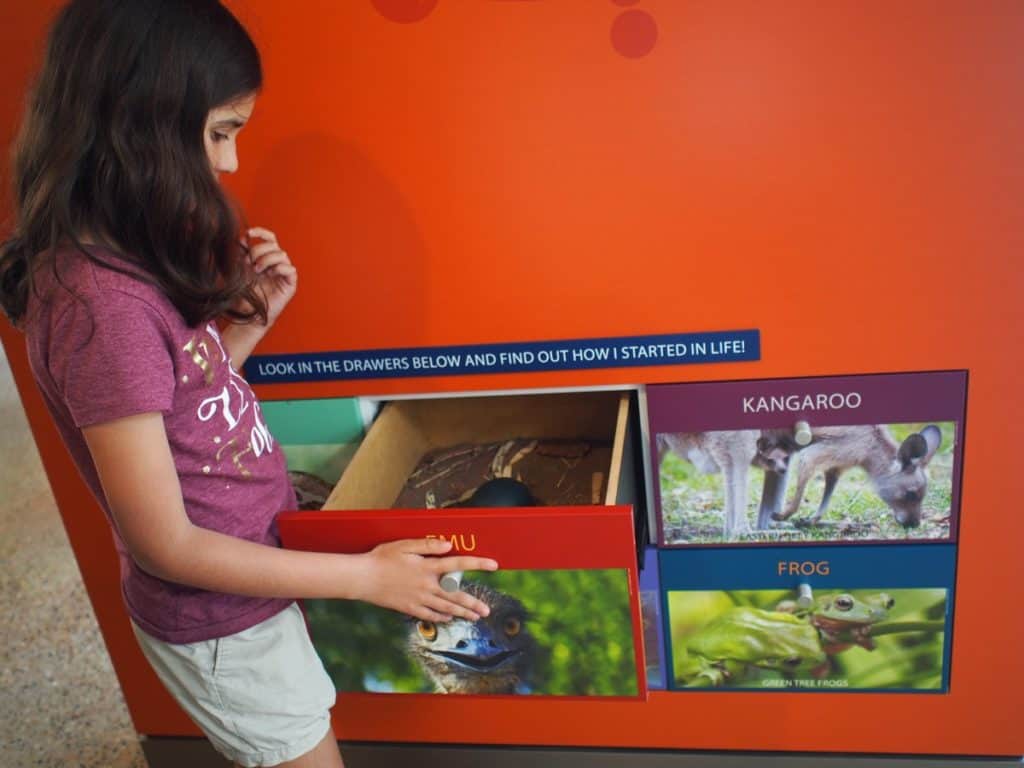
The information centre is kid-friendly with things to pull out and touch and read.
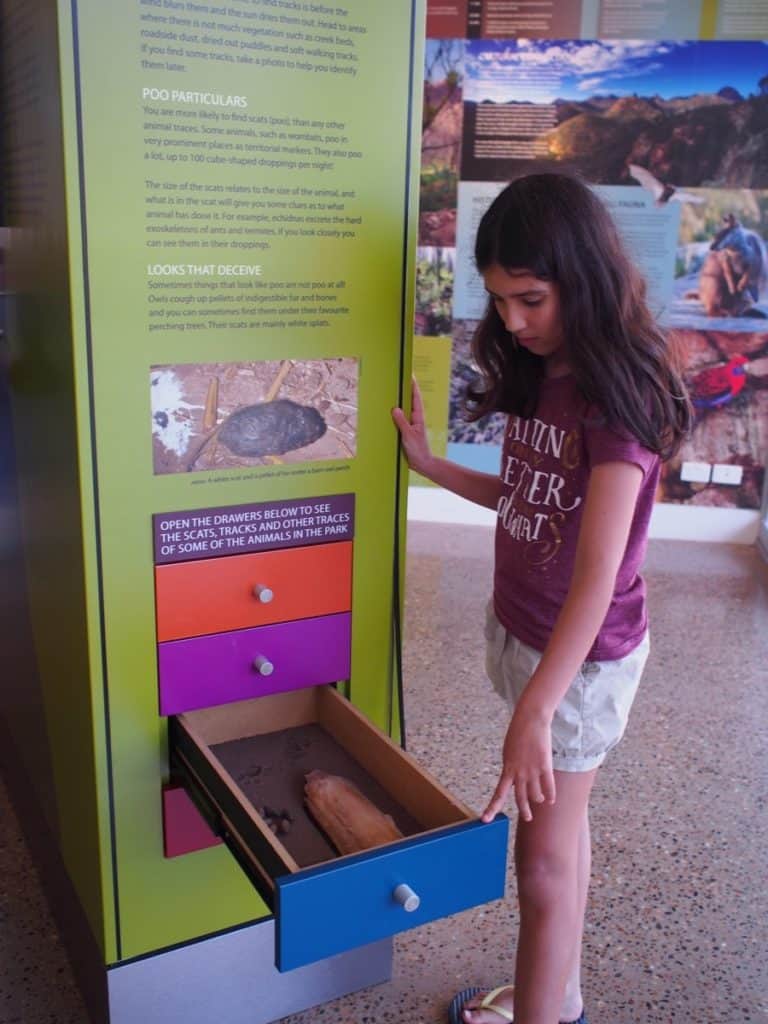
It’s a great introduction before you do some bushwalks around the National Park.
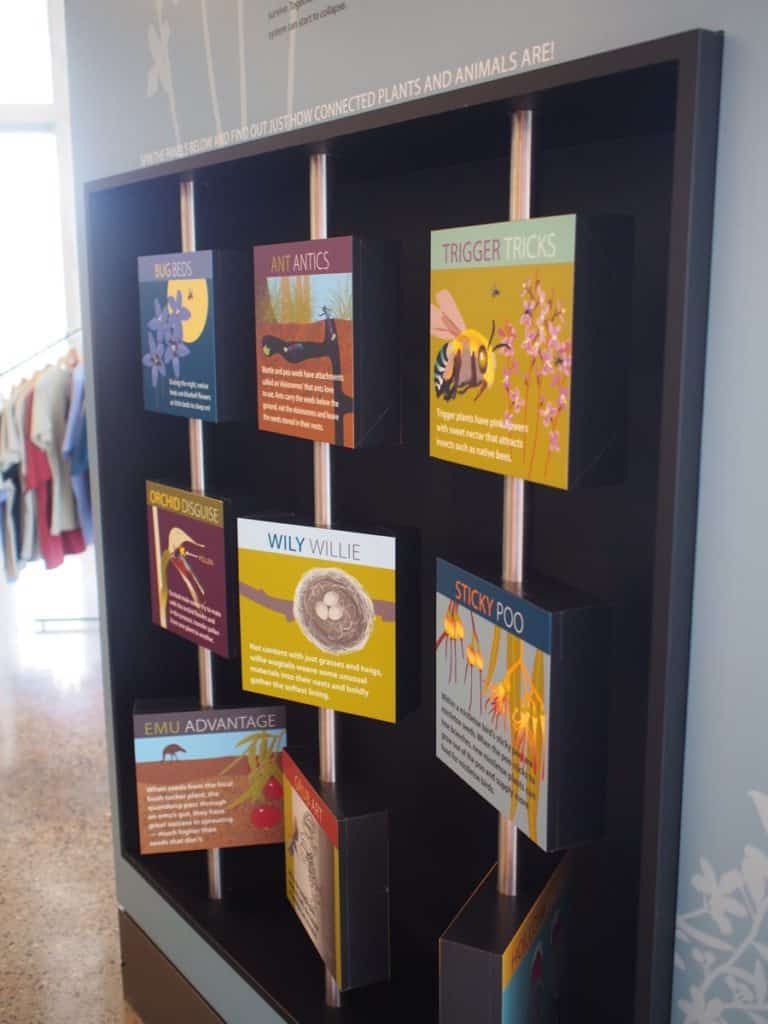
Whitegum Lookout Walk
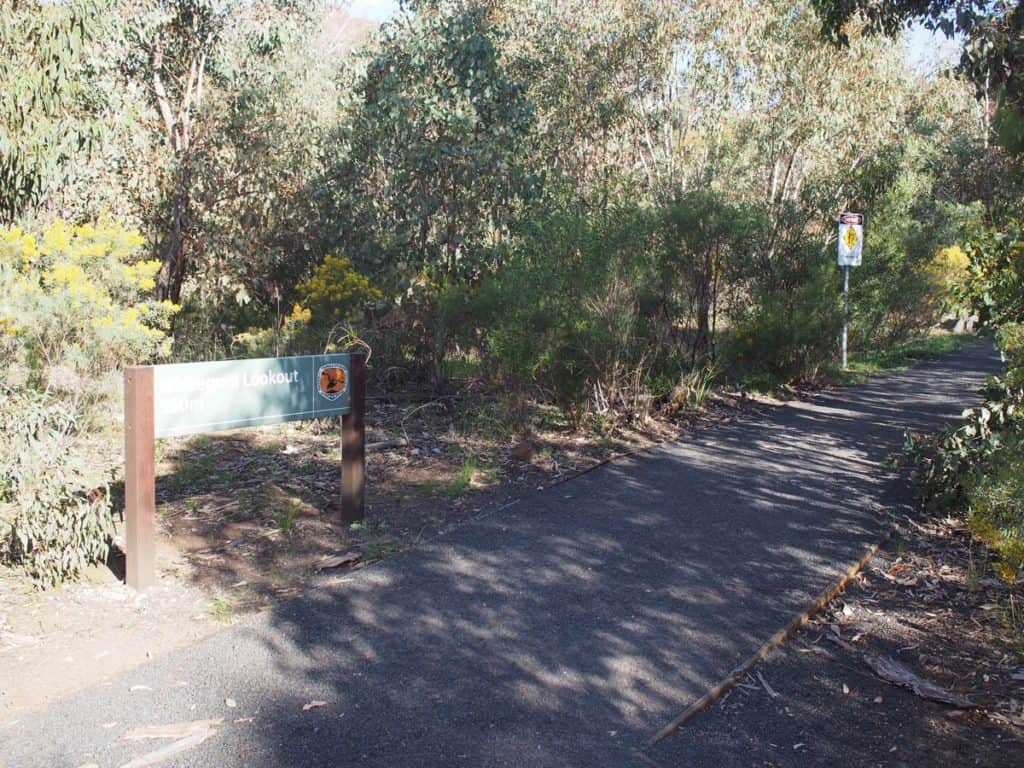
Although there are lots of walks in Warrumbungles National Park, we started with the Whitegum Lookout walk. This is an easy walk on a sealed path so it’s good for wheelchairs and prams.
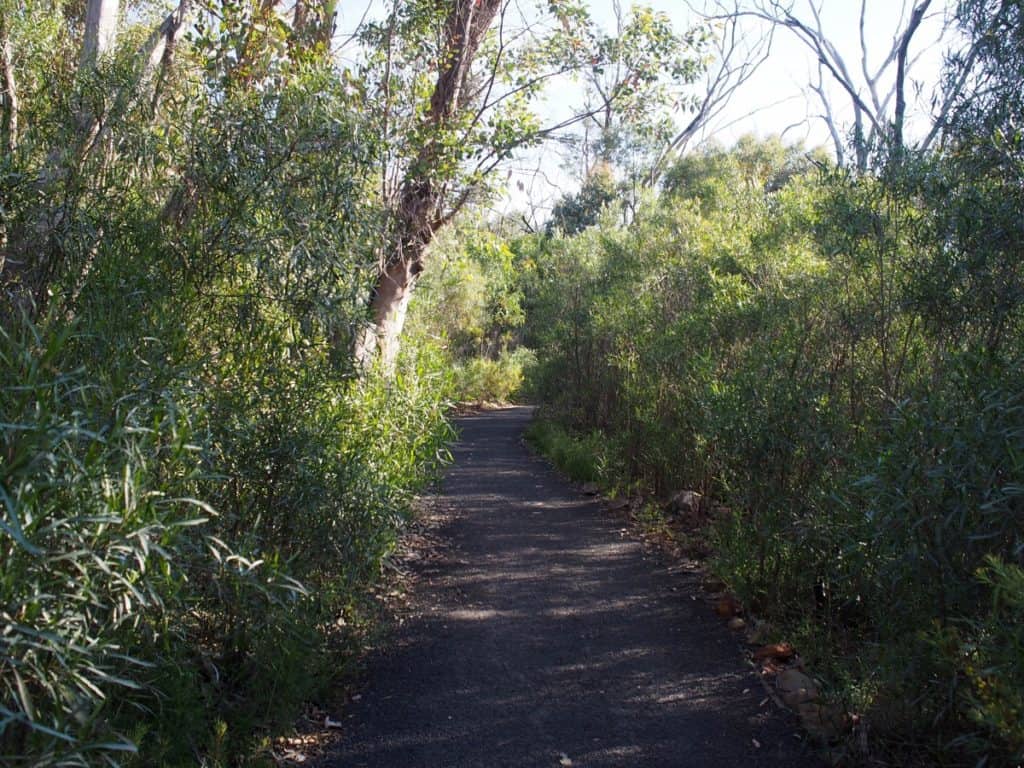
It’s a 1km return and takes about 30 minutes. The path ventures through various tree types including Red Gum, White Box and Ironbark Gums.
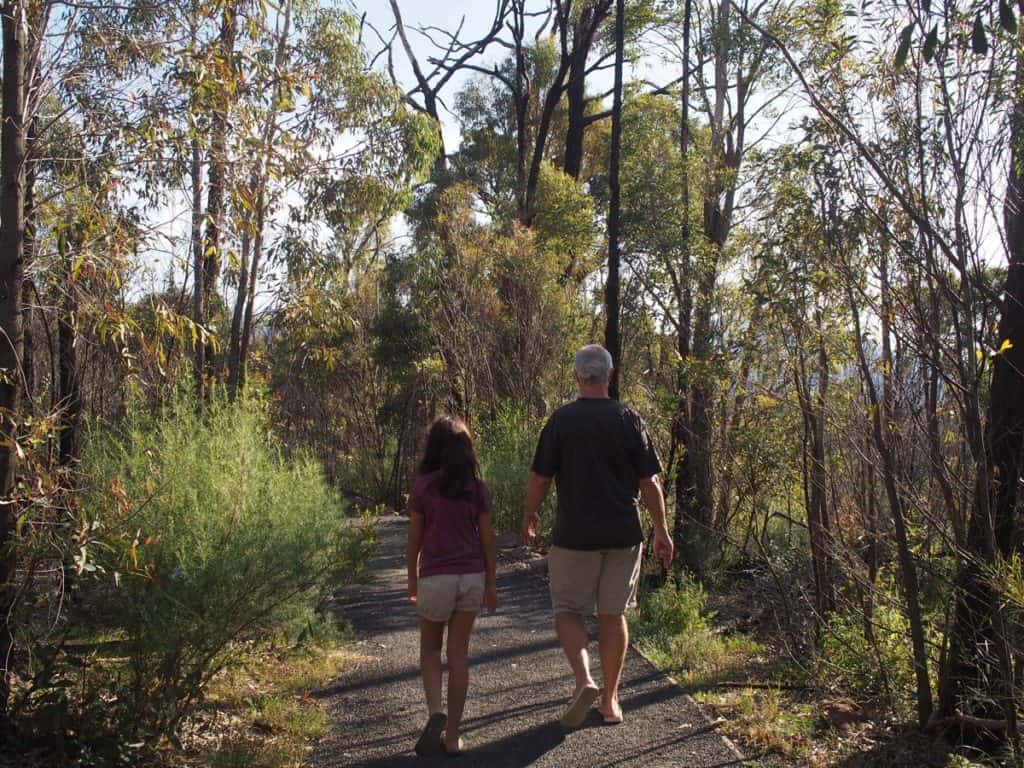
At the end of the walk, you’ll see expansive views over Grand High Tops, Bluff Mountain and Mt Exmouth.

This lookout is recommended as a great place for viewing sunsets.
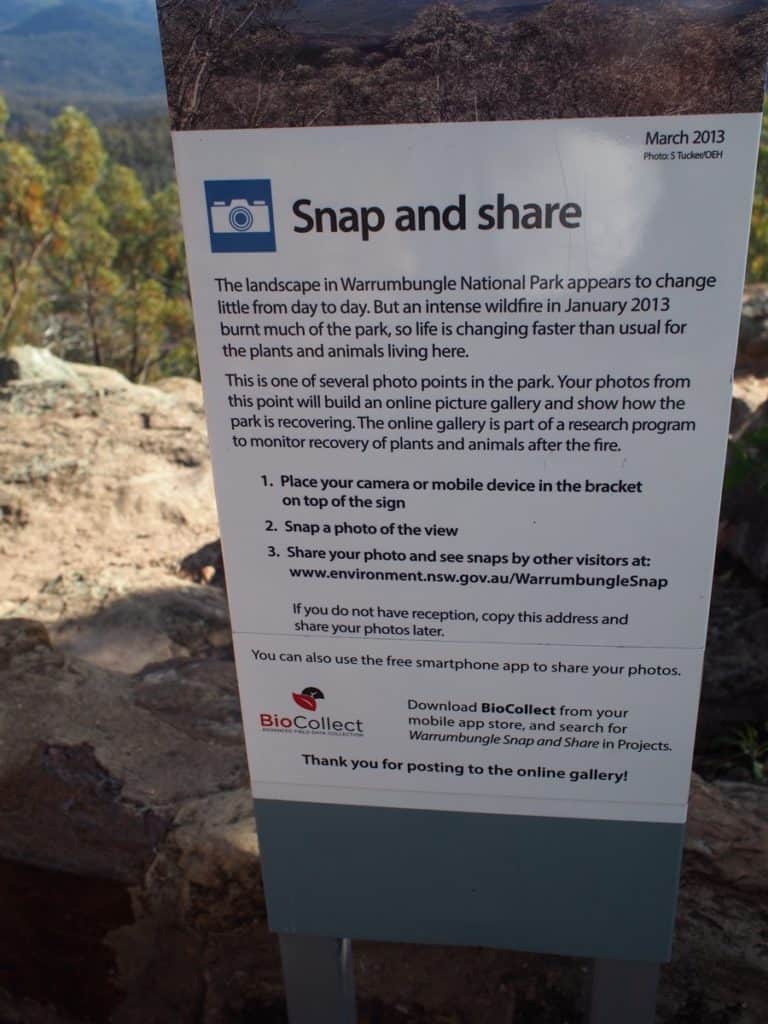
You’ll spot a sign asking you to snap and share. This is part of a project to build an online picture gallery to show how the park is recovering after a wildfire destroyed much of the park in January 2013.
Fans Horizon Walking Track
The next day, we ventured out on the Fans Horizon Walking Track which starts from the Pincham Car Park. (You’ll find toilets here, so go before you start your walk).
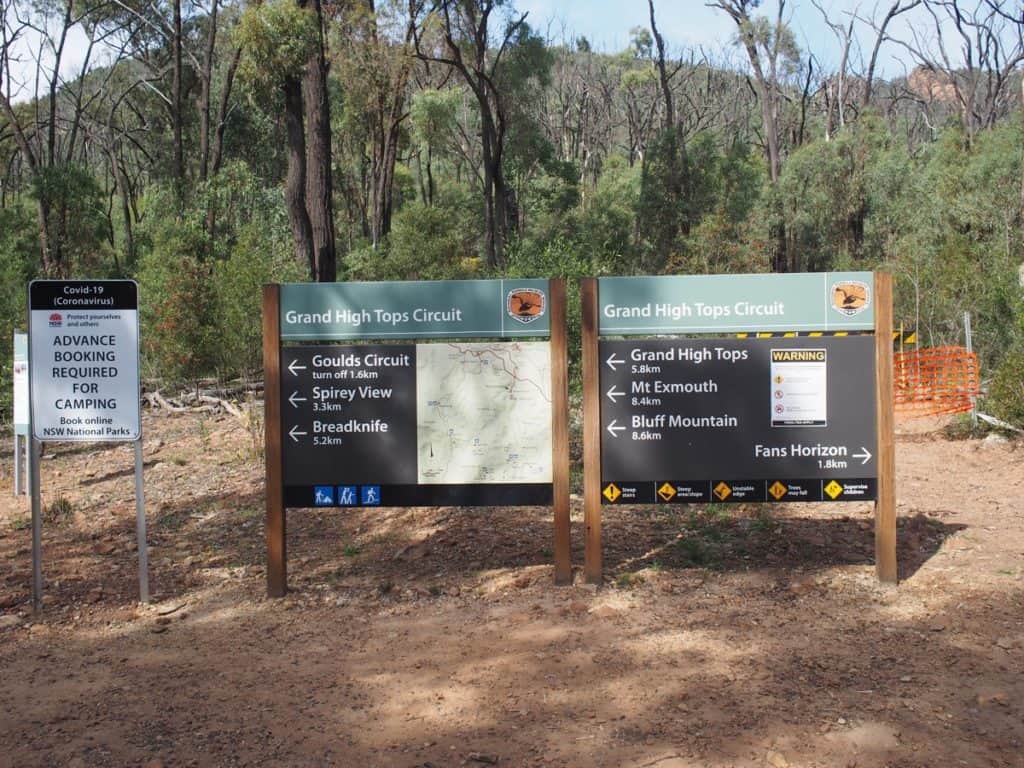
This is also the starting point for other walks. Around us, hikers were getting ready to do the famous Breadknife, Grand High Tops and Mt Exmouth walks. We instead opted for the Fans Horizon trail as we’re bushwalking with a kid. This walk is a 3.6km return and takes approximately 1.5 – 2.5 hours depending on how fast you walk.
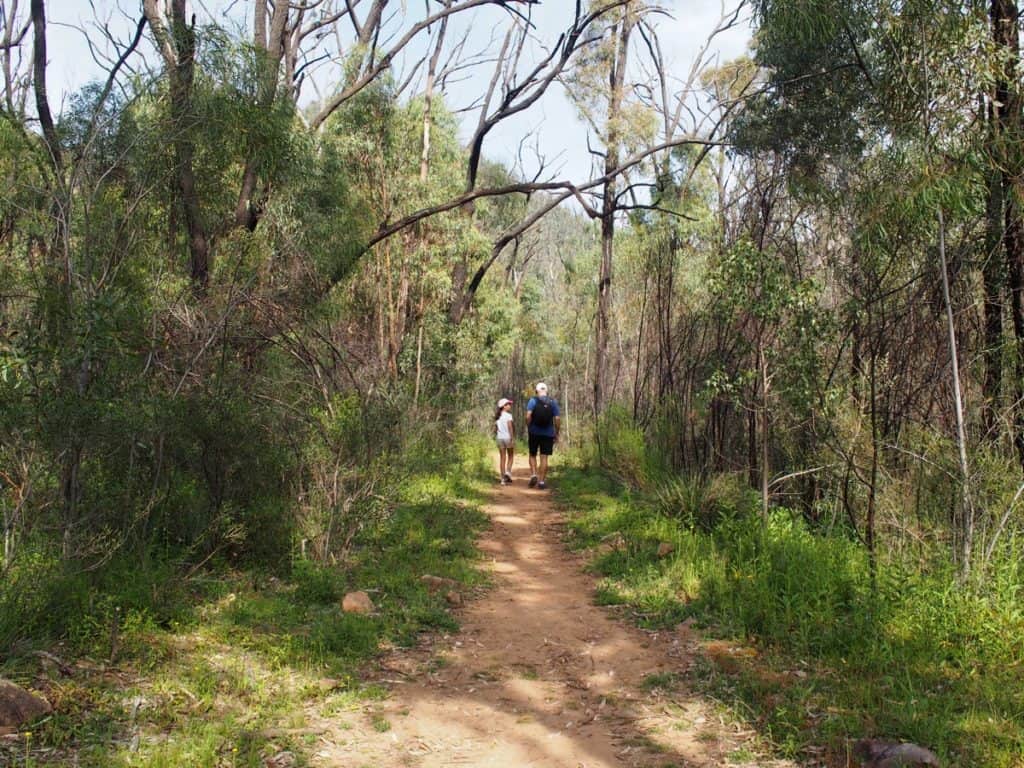
The trail starts pretty flat and then starts to climb through eucalypt forest. Fans Horizon is designated as moderate to steep and has many steps. In fact, there are over 1000 steps to climb up.
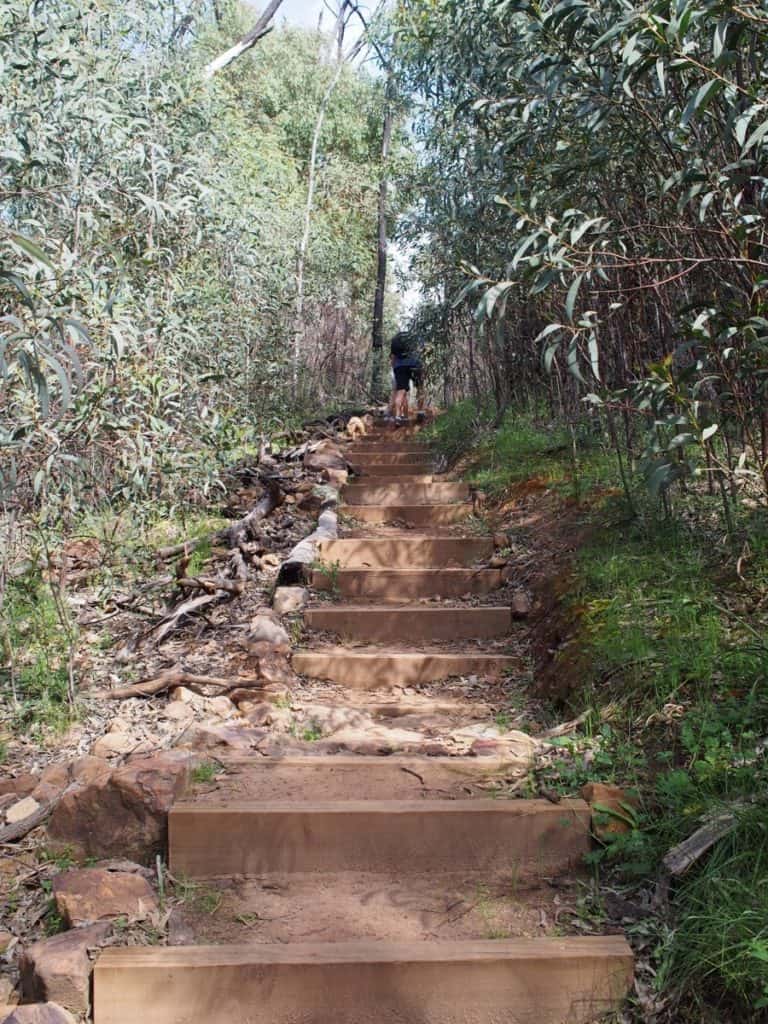
However, the path is well-formed and it’s easy to stop and take a break when you need to.

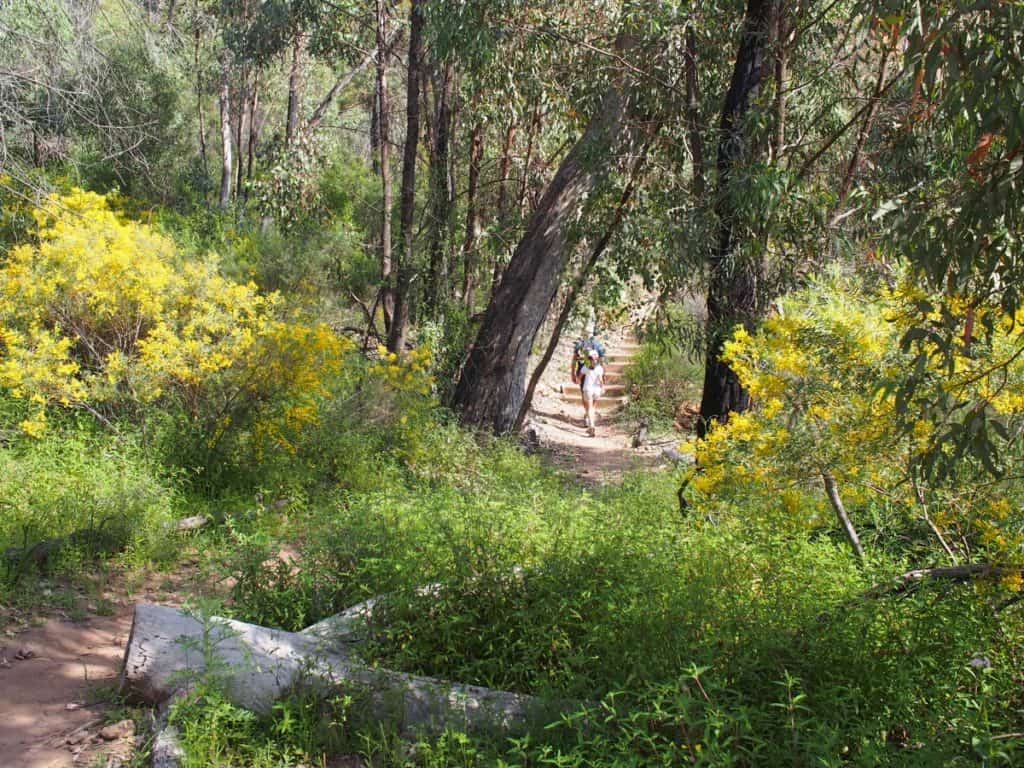
Along the way, you’ll spot flowers, birds, sandstone caves, lizards and other things to distract you from all the steps ahead.
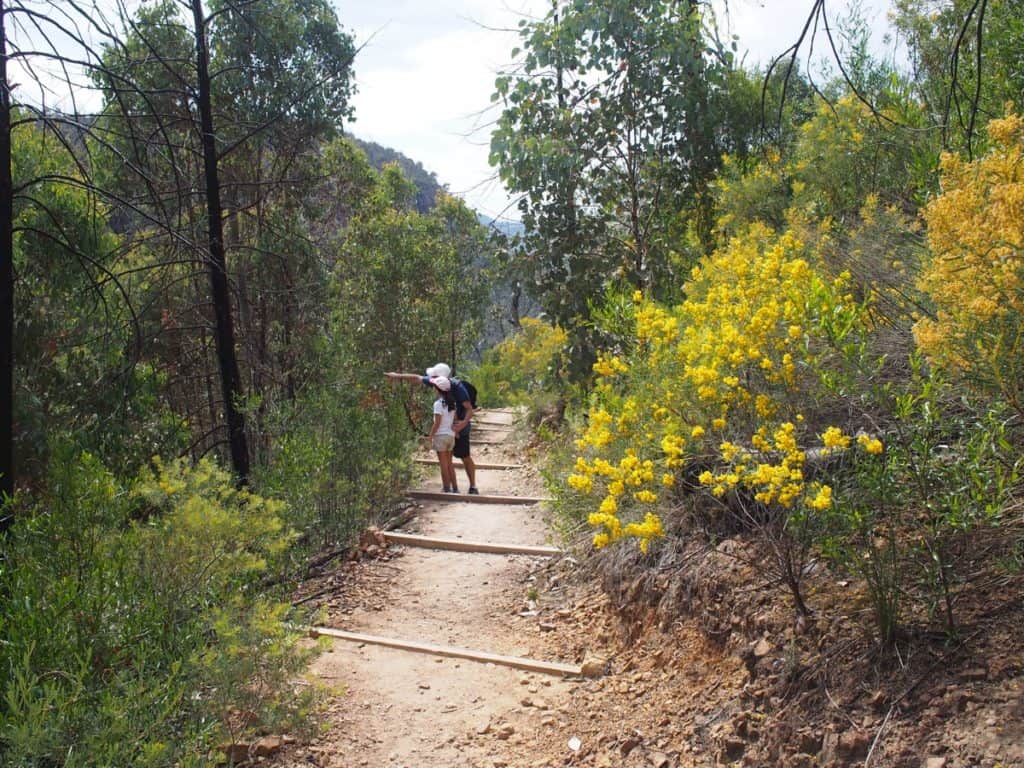
At the top, you’ll be rewarded with the beautiful Fans Horizon lookout. Supervise your kids as it’s a steep drop off. It’s a great place to stop for a drink and snack and enjoy the expansive views.
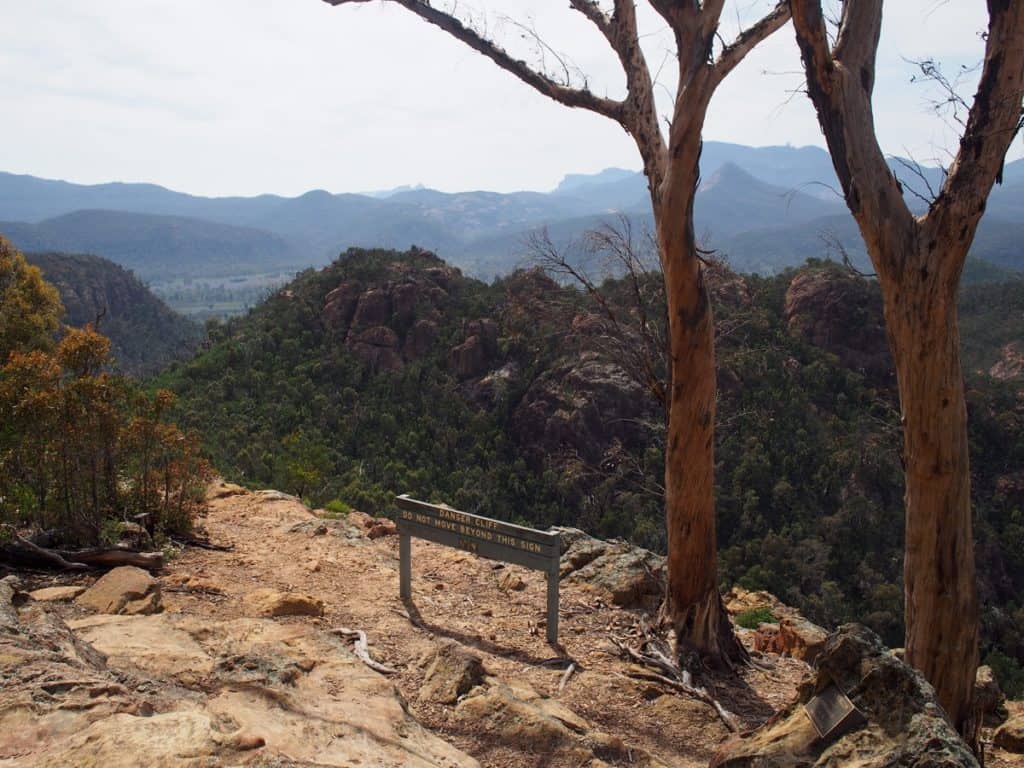
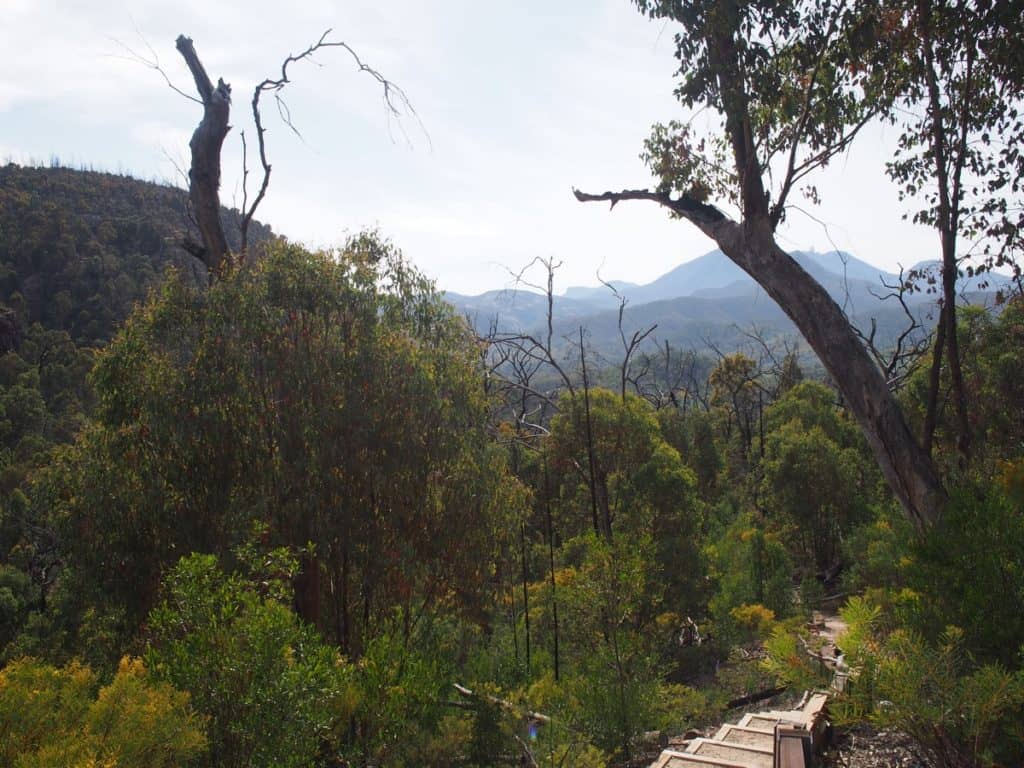
This spot offers magnificent views of the Warrumbungles famous volcanic rock formations. Across the valley, you’ll see the iconic Breadknife formation, Belougery Spire and Crater Bluff.
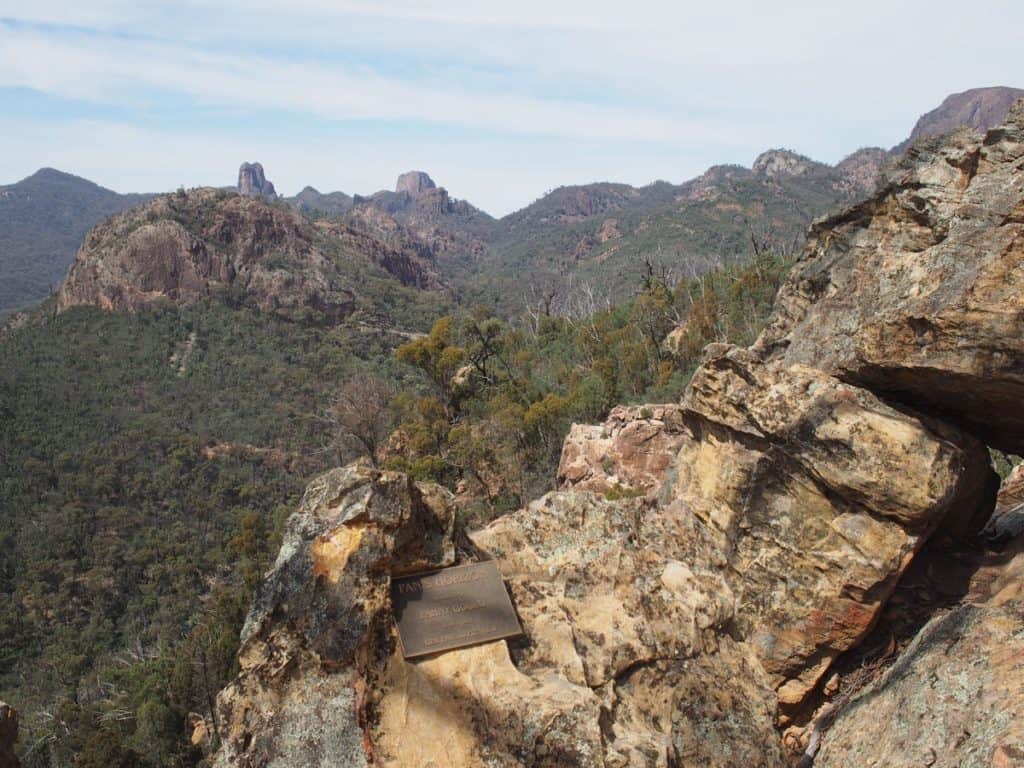
You’ll also spot a sign that Fan’s Horizon was named in memory of Fanny Gould, the wife of Alick Gould, a long-time Secretary of the Park Trust. The sign explains this was her favourite view.
As you leave the lookout for your descent down, check out the spur track which is about 10 metres back from the lookout. Here you’ll see views of the Bluff Mountain and Mt Exmouth.
It’s much easier on the way down but take your time to enjoy the views on the way down.
Burbie Canyon Walking Track
A completely different walk to Fans Horizon is the Burbie Canyon Walk. This walk starts from the Burbie Canyon carpark.
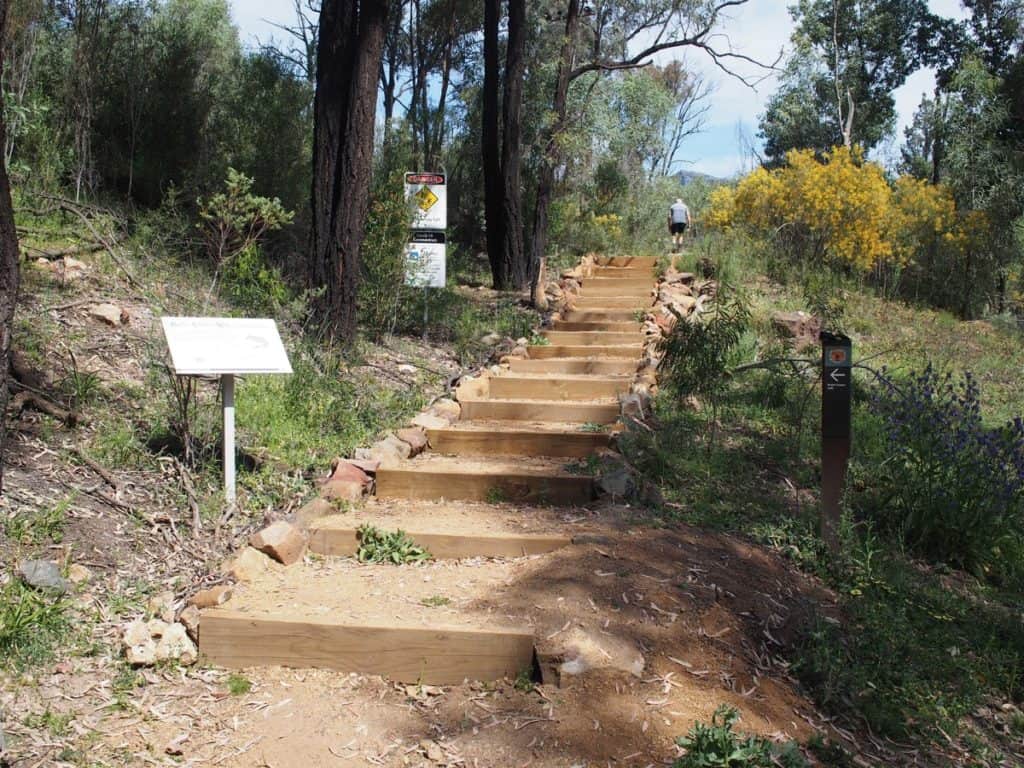
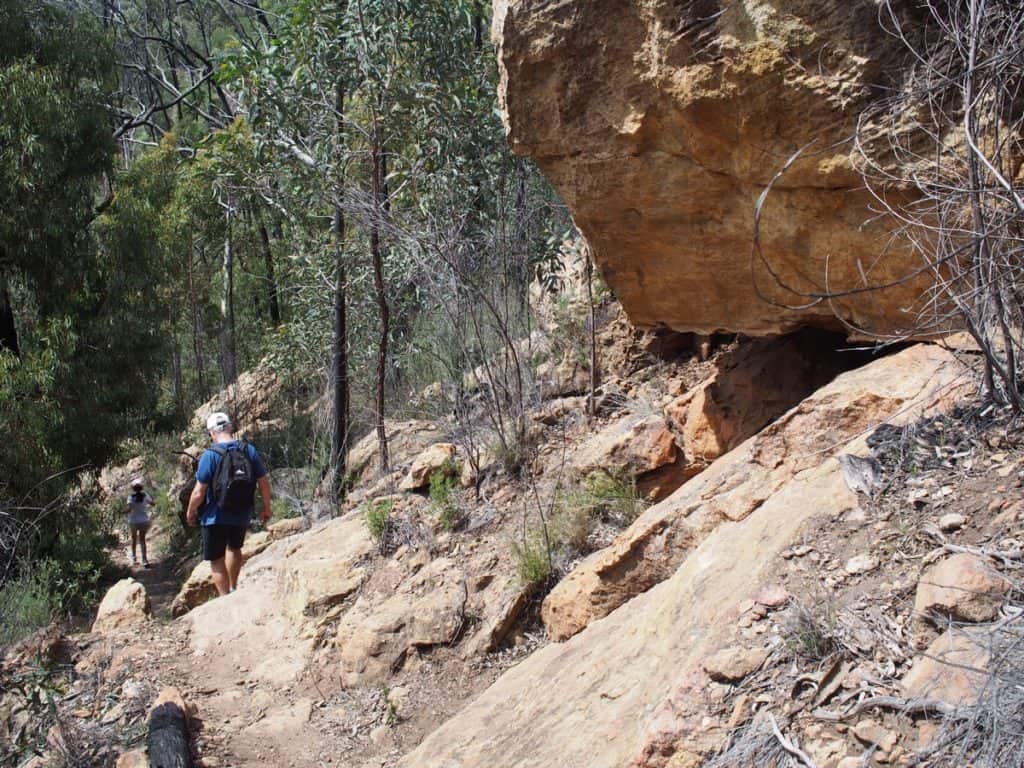
This is an easy to moderate walk which does have steps and creek crossings but it’s super fun with kids who like to explore.
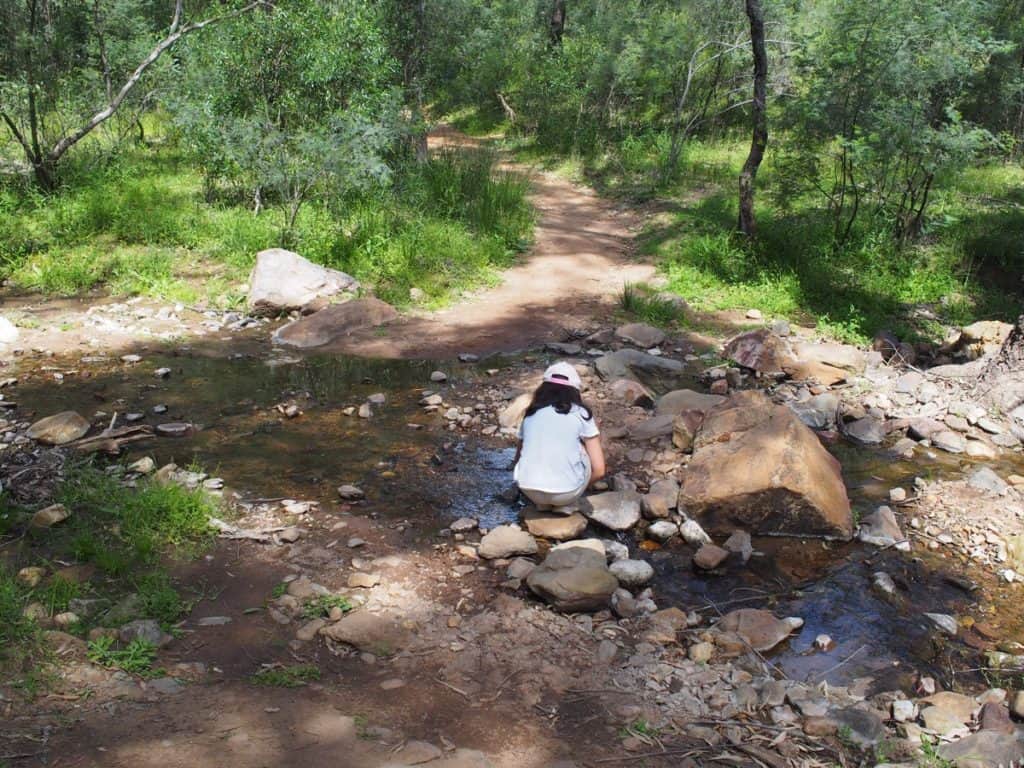
The walk follows along a usually dry creek bed before you cross the creek.
Keep walking and you’ll come to sandstone cliffs and giant boulders. Kids will love scrambling up the rocks.
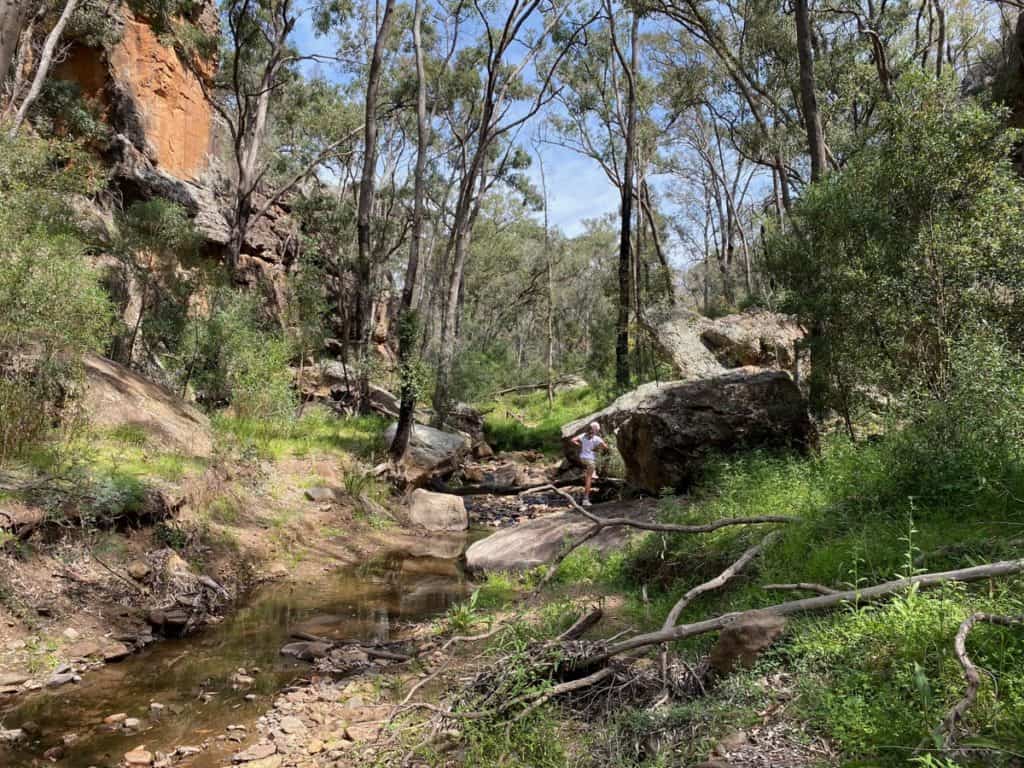
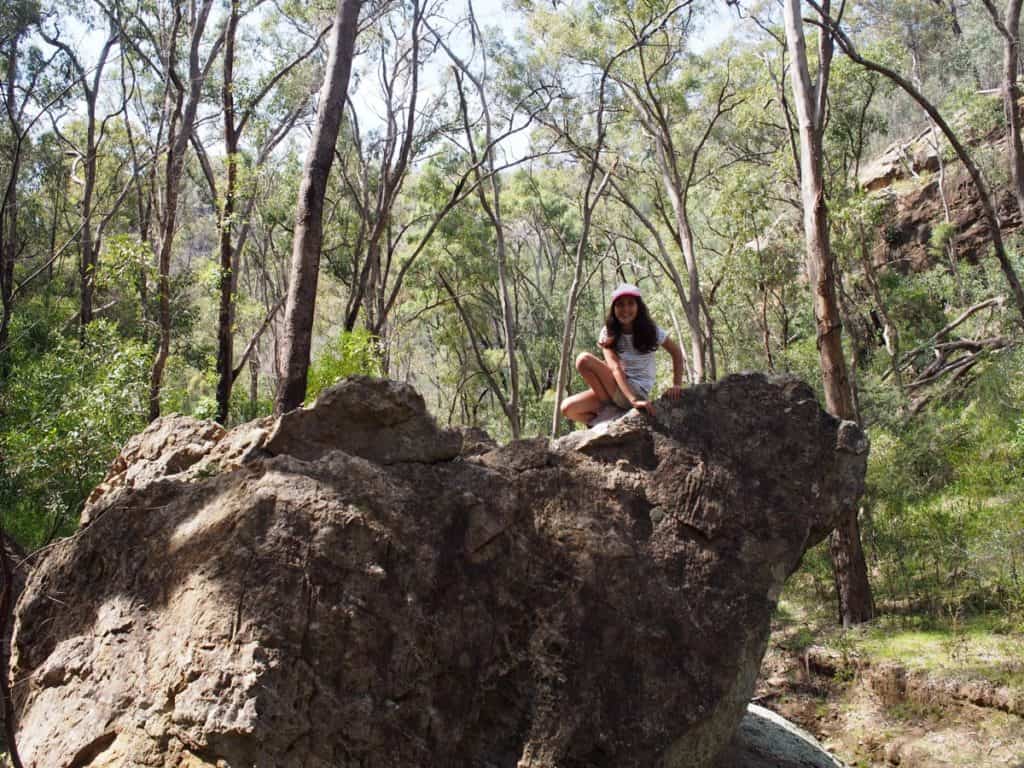
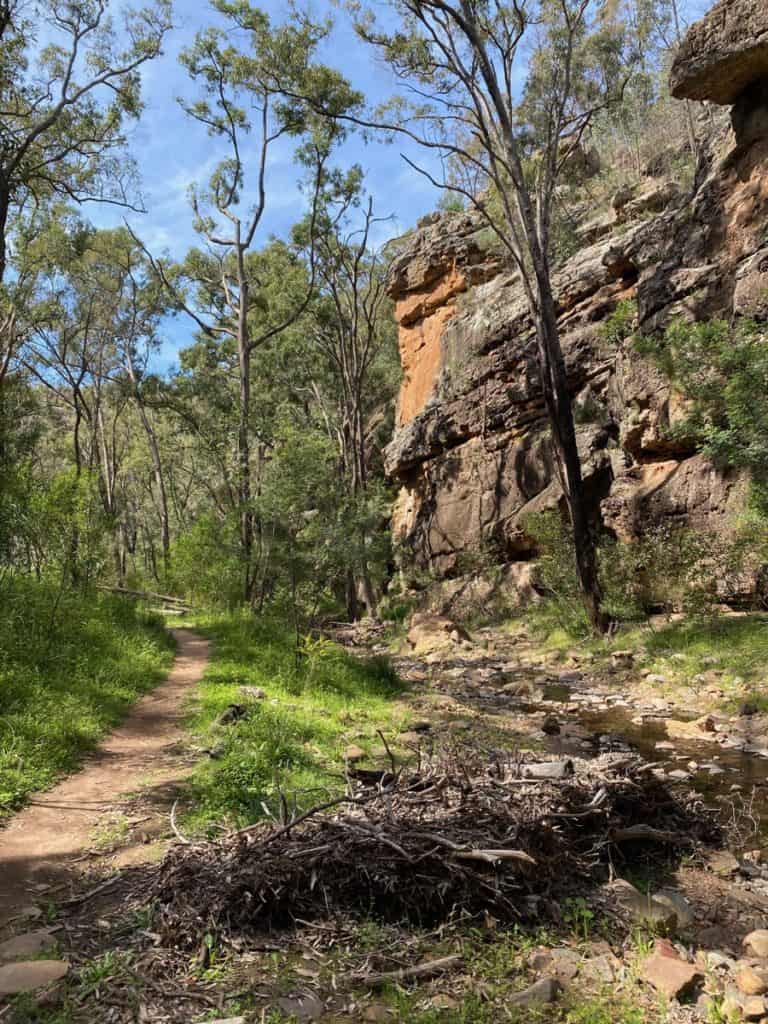
You’ll need to walk through a narrow sandstone gorge and then cross the creek again.
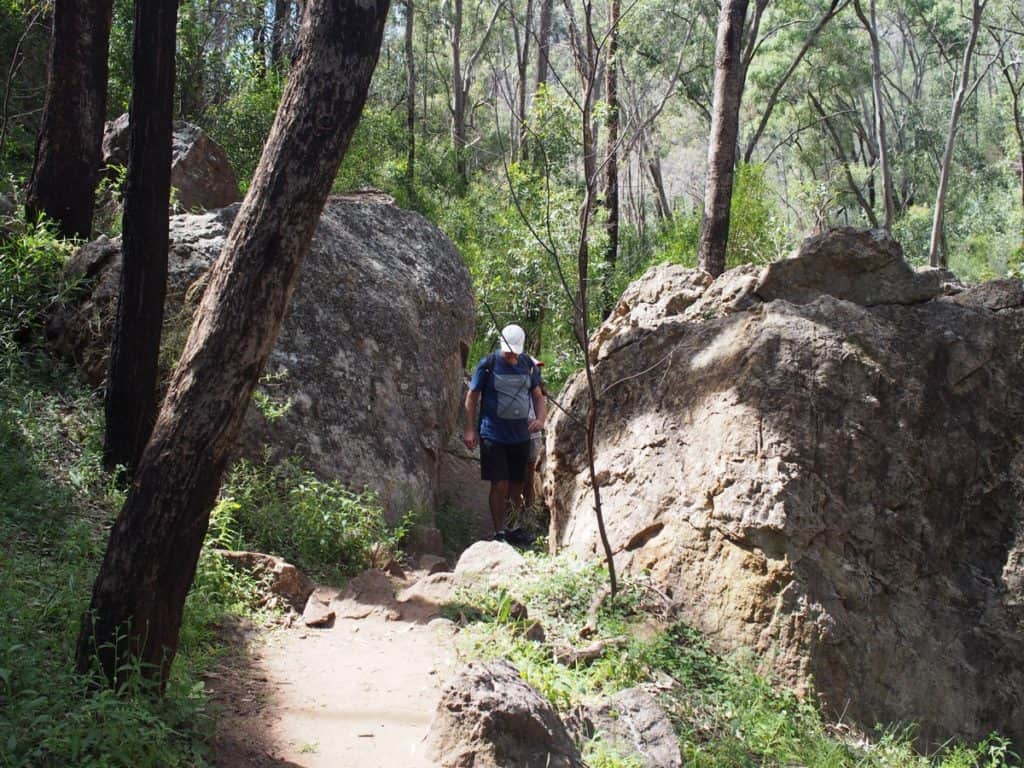
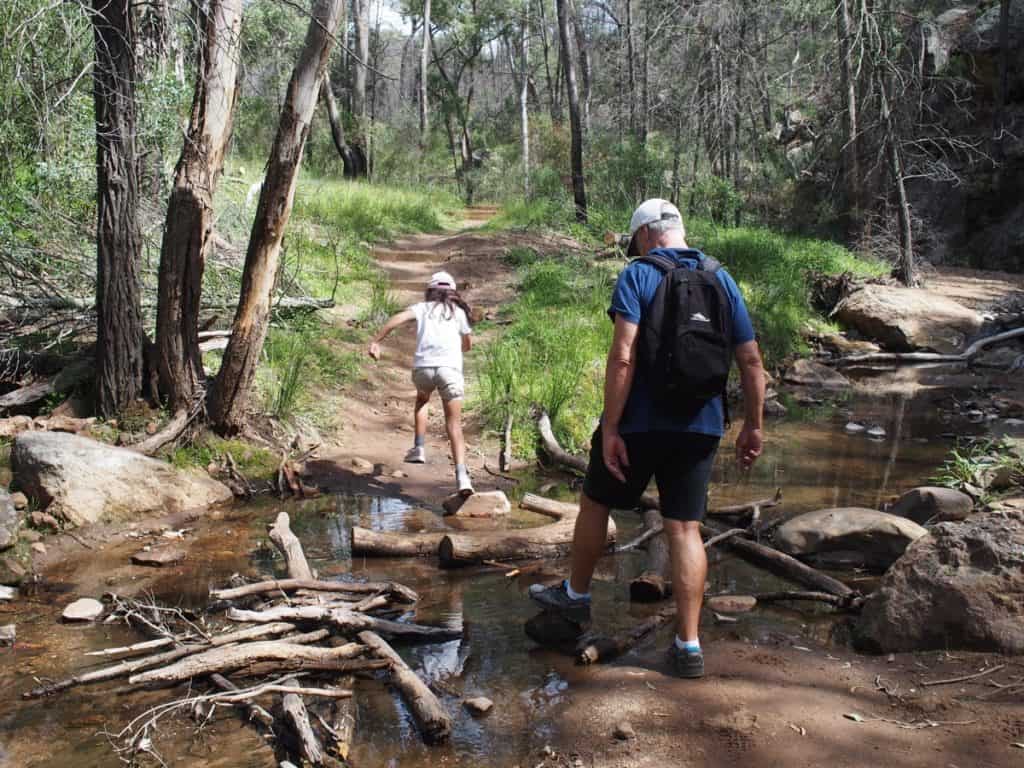
It’s a beautiful walk especially if it’s blooming with wildflowers.
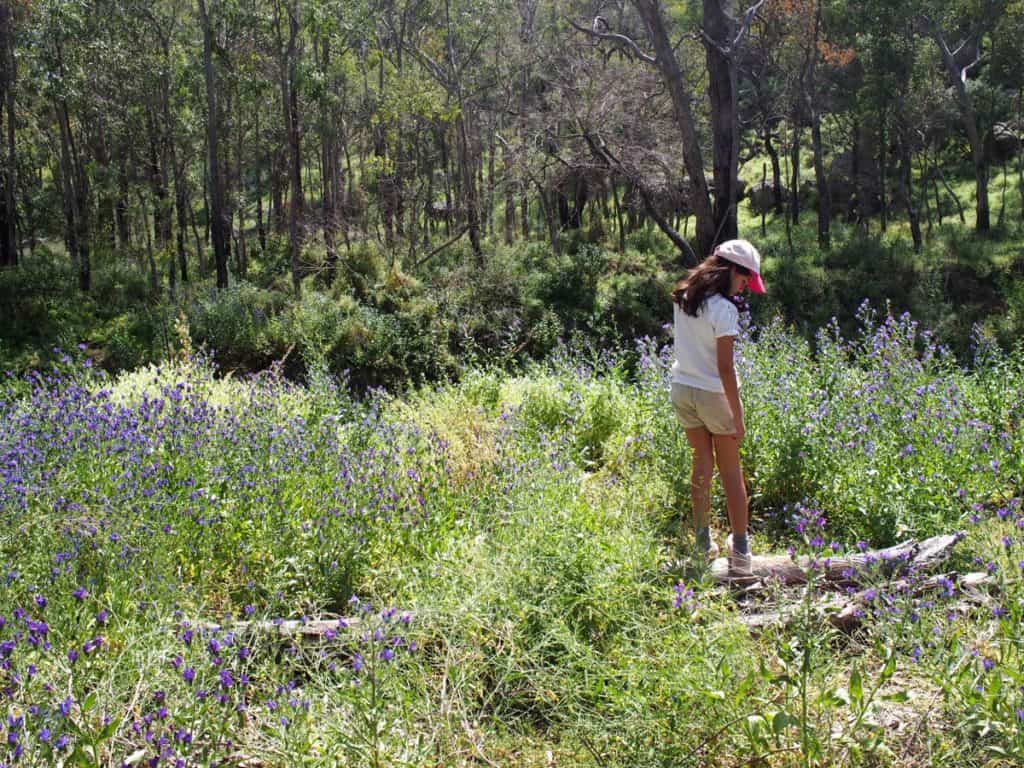
There is also lots of wildlife around. Burbie Canyon Walking Track is popular with birdwatchers due to the varied birdlife. Keep an eye out for peregrine falcons which nest in the rock face.
The Burbie Canyon Walk then joins the Burbie Fire Trail. You can return back the way you came with a 2km return walk or head left to join the Burbie Fire Trail which ends up at the Split Rock carpark, a 400m walk back to the Burbie Canyon carpark.
Sandstone Caves
If you have the time, visit the Sandstone Caves in Pilliga Nature Reserve. It’s a 35 kilometre drive from Coonabarabran but it’s worth the drive. The Sandstone Caves are a special place to the Gamilaraay people.
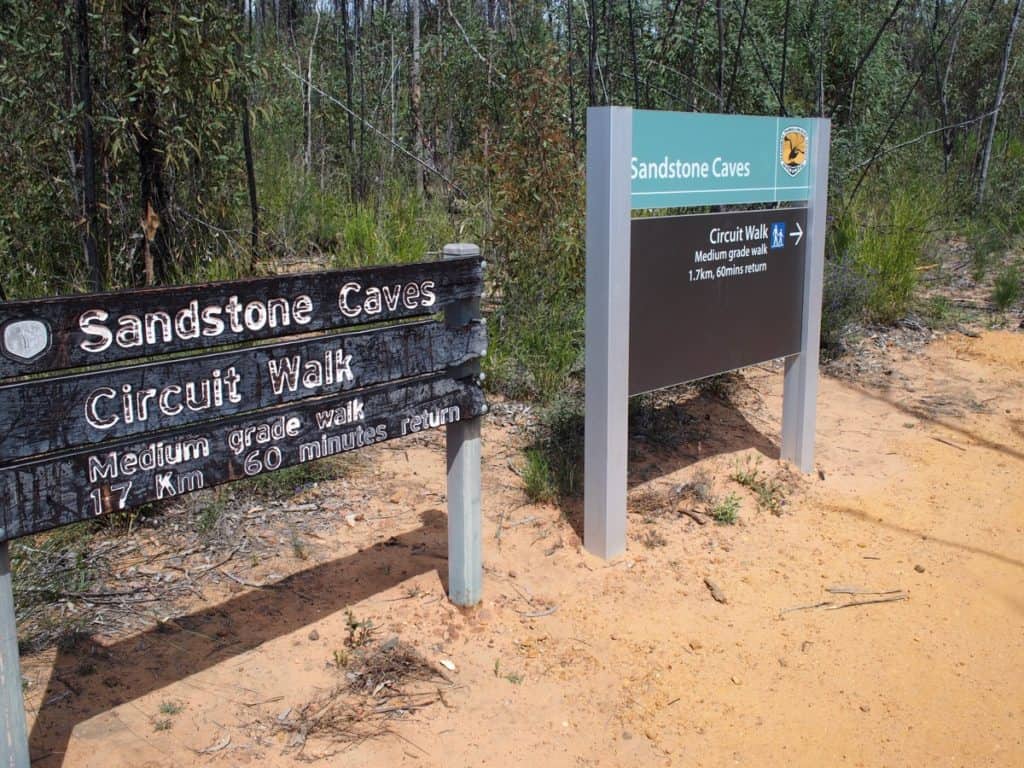
Note that the Sandstone Caves are not signposted from the Newell Highway at the request of Aboriginal Elders. You’ll need to follow the Newell Highway and after 3.7km past Cusack Creek, turn right onto a dirt road marked as Yaminbah Trail. You’ll come to a car park from which the Sandstone Caves Walk begins. There’s a toilet at the beginning of the walk if you need to use it.
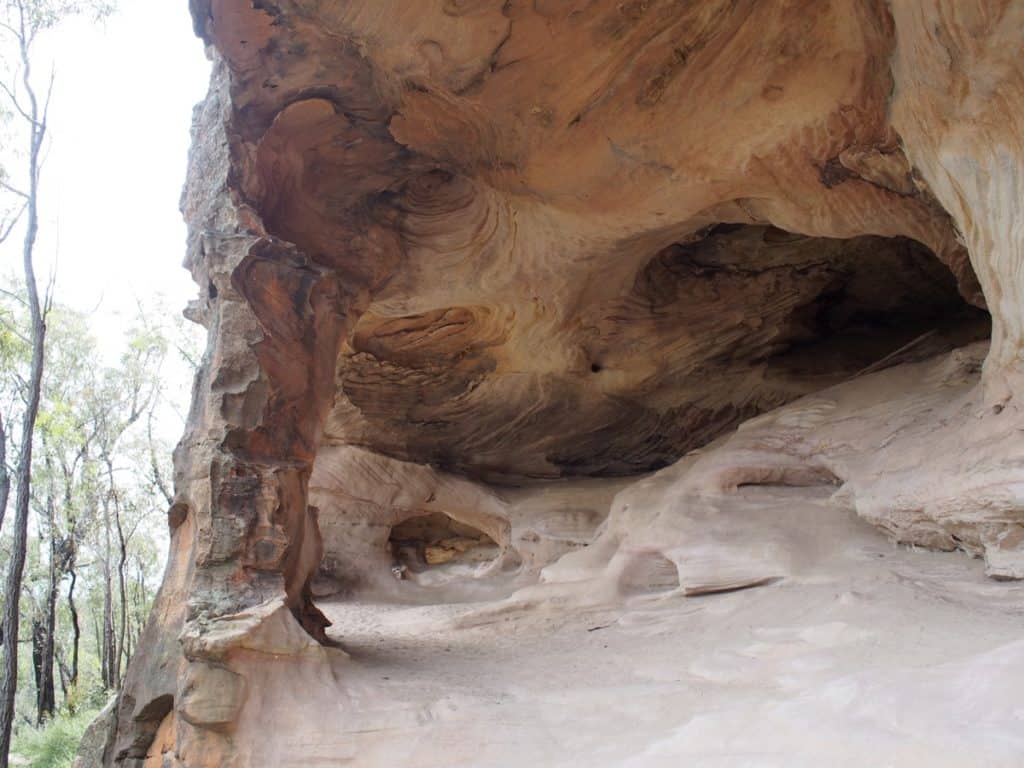
These caves are a series of cathedral type caves. Sandstone Caves Walk is a 1.7km loop around the sandstone caves.
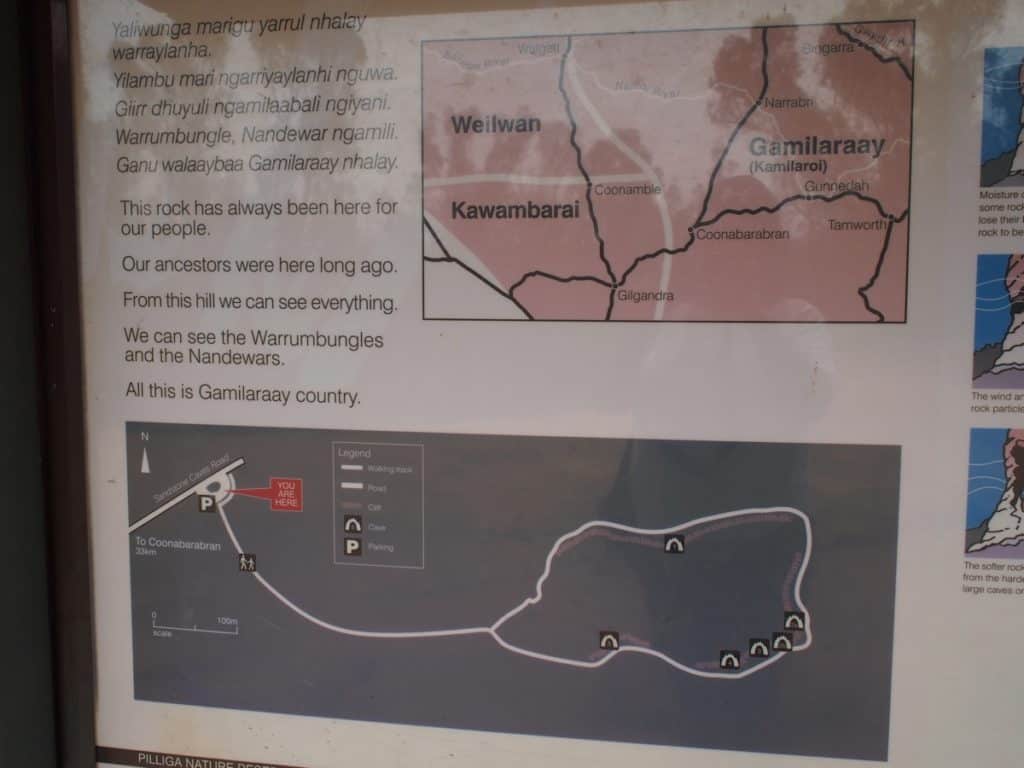
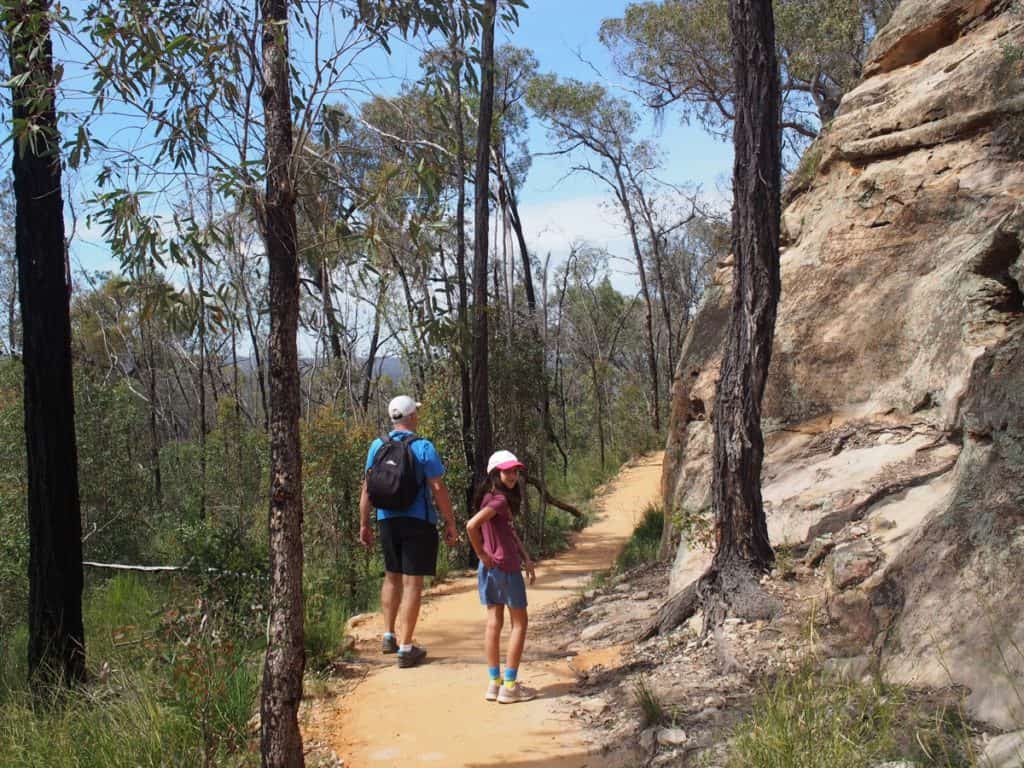
The trail takes you past cliffs and then past a series of caves.
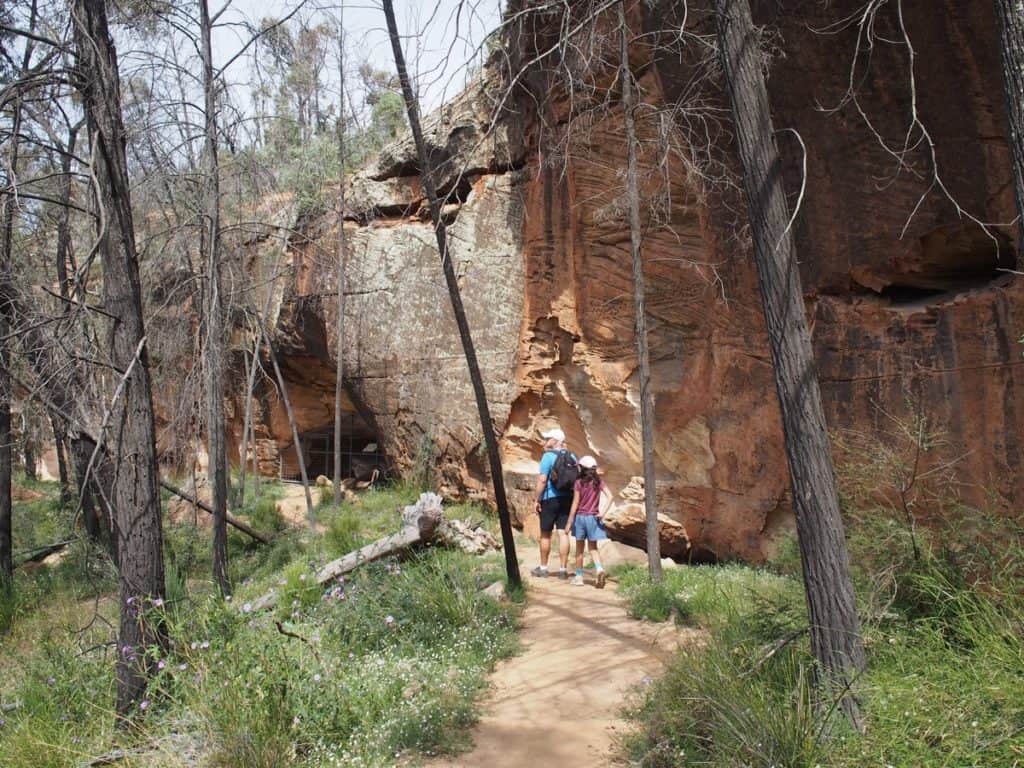
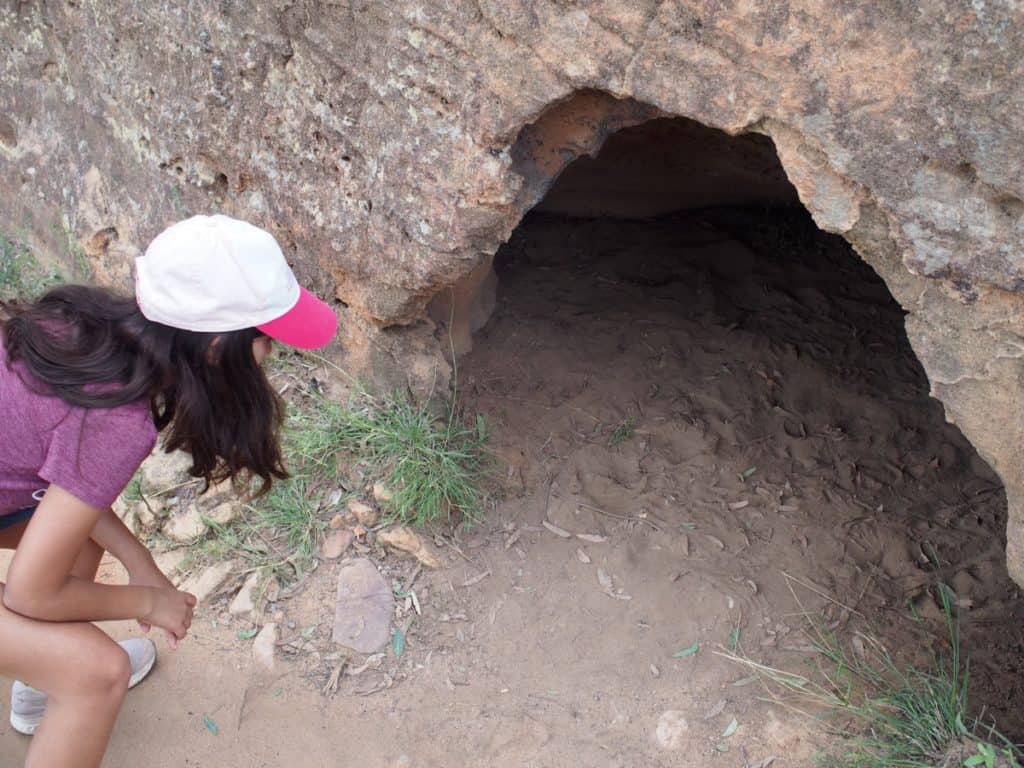
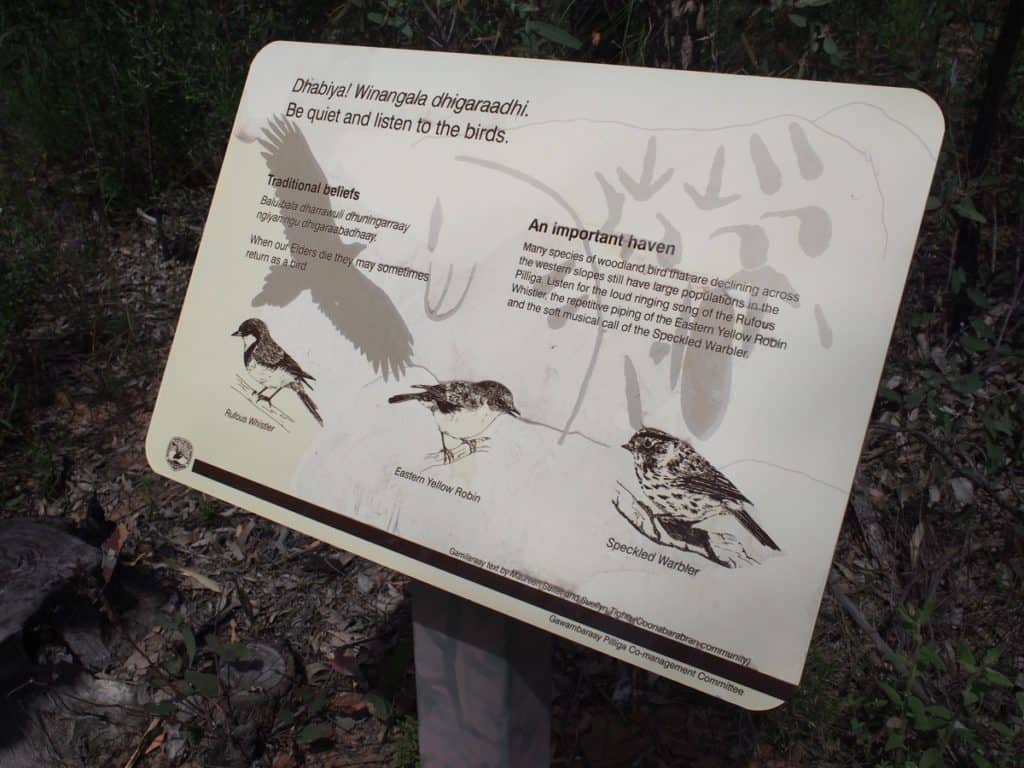
Interpretative signs explain different features like bird life, grinding grooves and rock art.
The caves have been blocked off to protect the site but you can still easily see ancient rock art.
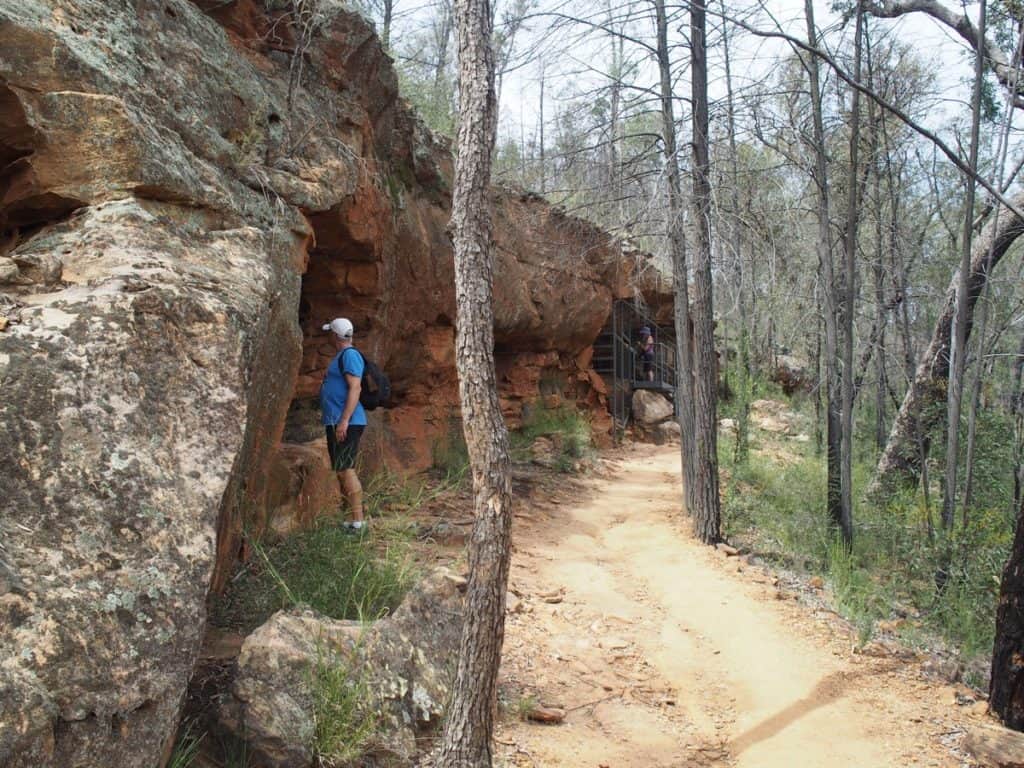

The weathering of the sandstone caves makes for interesting shapes.
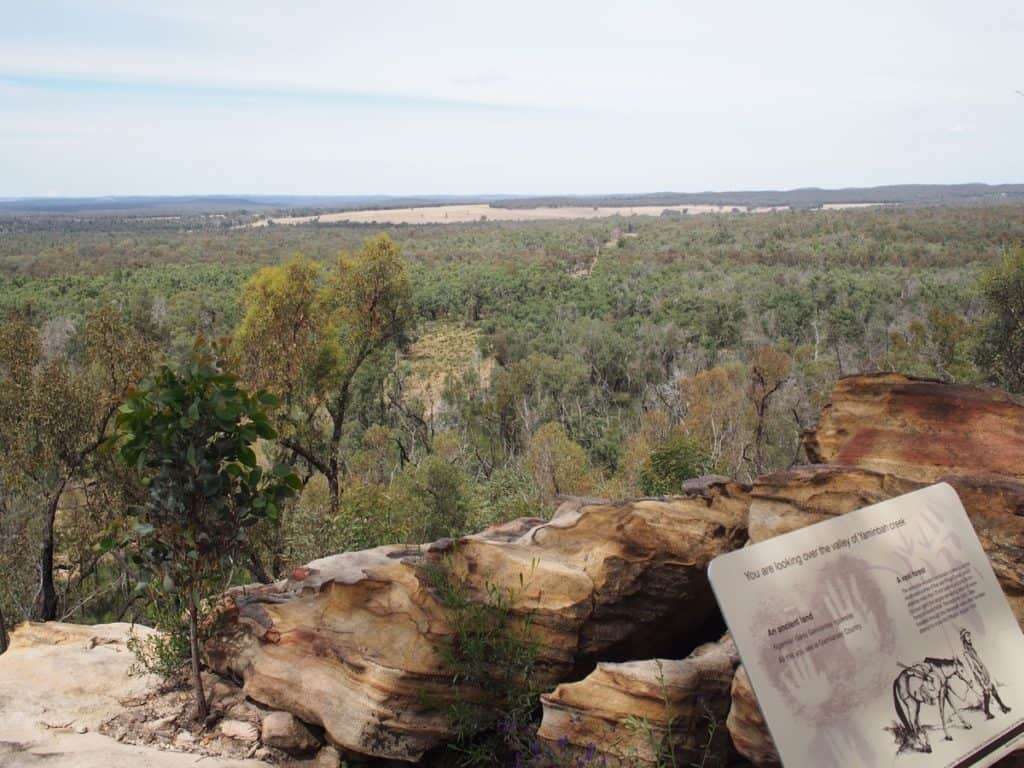
At a high point of the trail, you can look over the surrounding countryside.
Getting to Coonabarabran
From Newcastle, it’s just over a 4 hour drive to Coonabarabran going through Jerry’s Plains, Denman and Cassilis. It’s slightly longer going through Muswellbrook, Murrurundi and Quirindi. From Sydney, go via the Blue Mountains and Mudgee (from 5 hours and 35 minutes).
For more information, visit the Tourism NSW website about Coonabarabran.
Accommodation in Coonabarabran
There’s a variety of accommodation in Coonabarabran. We stayed in a 2-bedroom family suite at Acacia Motor Lodge in town. This motel was quiet and comfortable and great to return to after a day of bushwalking. It offers continental breakfast, free guest laundry facilities and a pool (which would be great when it’s hot).
You can also camp in Warrumbungle National Park. Camp Blackman is ideal for families. It has powered and unpowered sites and van sites. Facilities include hot showers, flushing toilets and gas BBQs. Also popular with camping families is Camp Wambelong.
Food in Coonabarabran
Coonabarabran Bakery – Stop here for delicious baked goods. The pies and cakes are delicious. I also recommend getting there early in the morning to grab pre-made sandwiches. They’re made Monday to Friday and great to pack in your backpack to eat on your bush walks.
Imperial Hotel Coonabarabran – You’ll find your standard pub fare at Imperial Bistro including burgers, pizza, schnittys and parmys. It’s a family-friendly place with great service.
Golden Sea Dragon Chinese Restaurant. Across the street from Acacia Motor Lodge, this restaurant offers an extensive menu. If you don’t want to eat in, grab some takeaway.
Coona Chicks. A charcoal chicken shop. Great for a meal or takeaway.
Coonabarabran makes a great base for exploring more of regional NSW with kids. If you’re coming from Newcastle or the Hunter, check out our guides to the Hunter Valley and Port Stephens for stops along the way.
Want more family holiday inspiration? Check out our guides to Dubbo, Port Macquarie, Coffs Harbour and the Blue Mountains.
Planning around the school holidays? Have a look at our School Holiday Guide for more ideas on when and where to travel.